
The Impact of Metabolic Rate on Room Comfort
Metabolic rate refers to the rate at which the body expends energy or burns calories to maintain its physiological functions.
ARTICLES
Wiratama
10/29/20255 min read
Understanding Metabolic Rate
Metabolic rate refers to the rate at which the body expends energy or burns calories to maintain its physiological functions. It is a fundamental aspect of human physiology, influencing how efficiently our body performs necessary tasks such as breathing, circulation, and digestion. Metabolic rate varies among individuals and can be affected by factors such as age, sex, body composition, and physical activity levels.
One crucial concept related to metabolic rate is the Metabolic Equivalent of Task (MET). MET is defined as a unit of measure that captures the energy cost of physical activities, relative to resting metabolic rate. One MET is equivalent to the energy expenditure of an individual at rest, which is approximately 3.5 milliliters of oxygen consumed per kilogram of body weight per minute, or about 1 kilocalorie per kilogram per hour. By utilizing this metric, one can easily compare various activities based on their energy requirements.
For example, a task that requires three METs implies that the activity consumes three times the energy of resting metabolic expenditure. This classification is useful for both fitness enthusiasts aiming to calculate their energy expenditure and for researchers studying the impact of various exercises on health outcomes. The basic units of MET can also be measured in watts per square meter (W/m²), providing another layer of insight into the energy demands of different physical activities.
Understanding metabolic rate and the MET metric is essential for grasping how various activities influence body heat production. This, in turn, plays a critical role in determining room comfort levels, as higher energy expenditures typically lead to increased body heat. Recognizing the significance of these factors underscores the intricate relationship between human physiology and environmental comfort.
Activity Levels and Their Corresponding MET Values
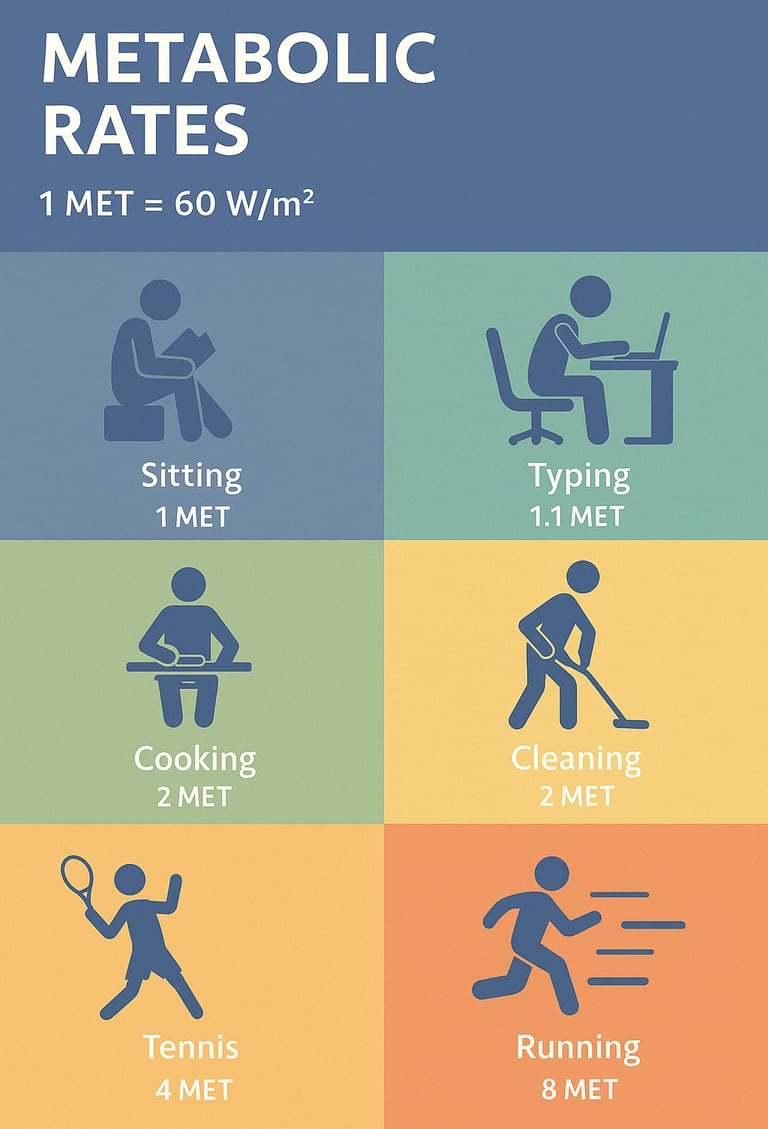
The concept of Metabolic Equivalent of Task (MET) serves as an important metric in assessing energy expenditure during various physical activities. MET values quantify the amount of energy expended while performing specific tasks, facilitating a better understanding of how energy levels correspond with indoor comfort conditions. Activities range from sedentary to vigorous, and each carries a different MET value, reflecting the intensity of energy expenditure.
At the lower end of the spectrum, activities such as sitting still have a MET value of 1, indicating minimal energy use. Typing activities, slightly more demanding, register at 1.1 MET, while driving, depending on the level of engagement, typically has a MET value ranging from 1 to 2 METs. These low energy activities contribute little to the overall body heat generation, consequently impacting indoor temperature comfort levels.
In more active scenarios, cooking demonstrates a MET value of approximately 2, which can lead to a slight increase in thermal energy. Cleaning, another common household chore, has a MET value of around 3, producing a more noticeable amount of body heat. This heat generation becomes relevant as it can affect the thermal comfort of the surrounding environment.
Further up the activity ladder, playing tennis, categorized under moderate activity, has a MET value of 4. Moving towards high-energy activities, hiking can vary between 6 and 7 METs depending on the pace and difficulty of the terrain, while running is among the most energy-intensive pursuits, boasting a MET value of 8. The higher the MET value, the more heat the body generates, thus necessitating adjustments in indoor climate management to ensure sustained comfort. Understanding these values helps individuals and facility managers create environments conducive to activity levels, optimizing energy usage and indoor comfort.
The Relationship Between MET Values and Room Comfort
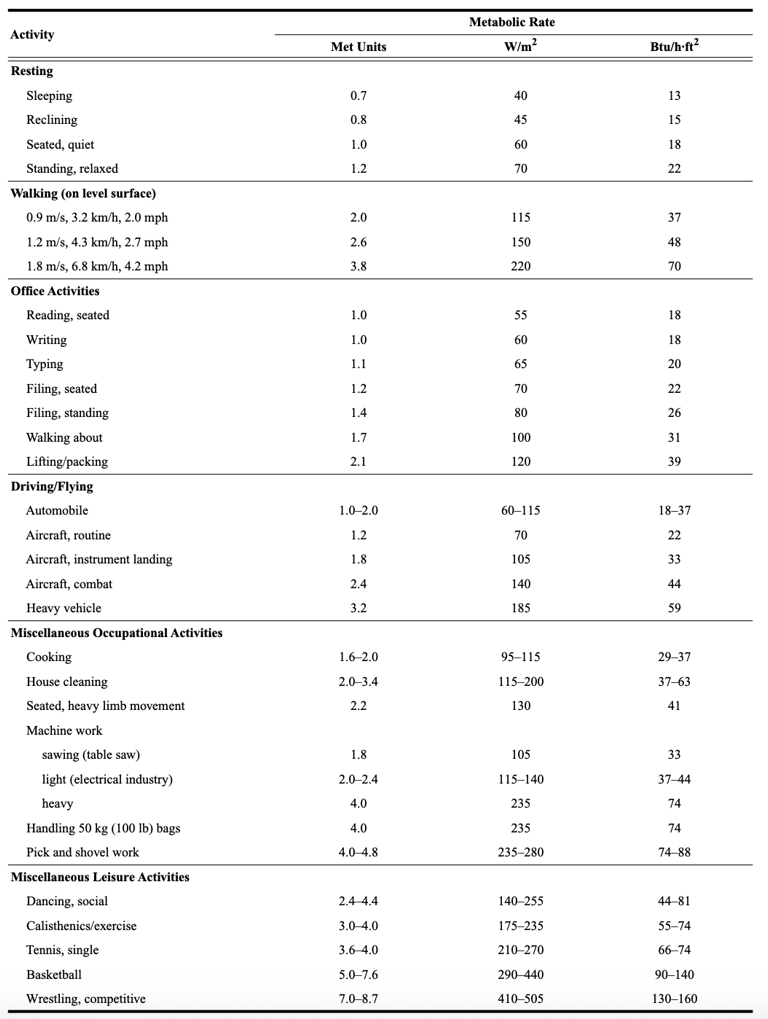
The relationship between metabolic equivalent task (MET) values and room comfort is an essential aspect of understanding how physical activity affects thermal comfort in indoor environments. MET values are used to quantify the energy expenditure of individuals during various activities. Higher MET values indicate more intensive physical activity, which consequently increases metabolic heat production. This heat is released into the surrounding environment, leading to elevated body temperatures that can significantly impact perceived comfort levels within a room.
When engaging in tasks with higher MET values, the body generates additional heat, creating a demand for optimal indoor conditions. Excessive heat can lead to discomfort, prompting the need for effective temperature control and ventilation strategies. The effectiveness of these measures is influenced by several room conditions, including temperature, humidity, and air circulation. For example, in spaces where air circulation is inadequate, an increase in metabolic heat can cause discomfort more rapidly because the stagnant air fails to disperse the warmth produced by the body.
Besides temperature, the role of humidity cannot be overlooked. High humidity levels can hinder the body's ability to sweat, further exacerbating discomfort, especially during high MET activities. Additionally, proper ventilation becomes crucial, allowing for the exchange of indoor air and enhancing comfort levels by removing excess heat and humidity. This interplay between metabolic rate and environmental conditions underscores the importance of addressing both factors to achieve a balanced and comfortable indoor atmosphere.
In conclusion, understanding the relationship between MET values and room comfort is vital for designing spaces that cater to the needs of individuals engaged in various activities. By recognizing how increased metabolic heat interacts with room conditions, effective strategies can be implemented to maintain an ideal level of comfort for all occupants.
Strategies to Enhance Room Comfort Based on Activity Levels
Enhancing room comfort is a multifaceted endeavor that varies significantly according to the metabolic rate of the individuals occupying the space. Understanding how different activity levels influence comfort can lead to tailored strategies for optimal room conditions. One effective approach is to adjust room temperatures based on the intensity of activities being performed. For instance, lower temperatures may be desirable during periods of low activity, such as reading or working at a desk, while more vigorous tasks, like exercising or engaging in group activities, may necessitate higher temperatures to prevent discomfort from excessive sweating.
The use of fans or dehumidifiers can further improve comfort levels by promoting optimal airflow and managing humidity. Fans can provide a cooling effect, helping to counteract heat generated by increased metabolic rates during physical activities. Dehumidifiers, on the other hand, are particularly useful in maintaining a comfortable environment, especially in humid conditions, as excessive humidity can lead to feelings of discomfort and lethargy. It is essential to integrate these tools based on the predicted activity levels within a space.
Moreover, designing living and working environments to accommodate varying activity levels will greatly enhance overall comfort. This can include creating flexible spaces that allow easy transitions between different activities, such as moving from a collaborative workspace to a quiet reading nook. The inclusion of adjustable furniture and the strategic placement of seating can facilitate changes in posture and activity, contributing to a more dynamic and comfortable atmosphere. Personal comfort preferences should be considered throughout this process, as individual responses to temperature and airflow can differ widely. Additionally, fostering a habit of regularly reassessing room conditions to align with changing activities can significantly enhance the overall experience of occupants.
tensorHVAC-Pro is a flow and thermal simulation software, intuitive and easy to use, designed for HVAC engineers - not CFD expert. Learn more..
Read more articles..