Data Center HVAC System Design and Strategy
Data Center HVAC System Design and Strategy, from energy consumption, layout, system design, cooling methods, equipments, strategy, and air management
ARTICLES
Wiratama
1/31/20265 min read
Why Data Centers Are Growing – Global Energy Consumption and Cooling Energy Contribution
The rapid growth of data centers is driven by the digital transformation of almost every sector. Cloud computing, artificial intelligence, big data analytics, video streaming, Internet of Things (IoT), and 5G networks require massive computational power and storage capacity. As a result, data centers are expanding in both number and size across the globe.
From an energy perspective, data centers are among the most energy-intensive building types. It is estimated that data centers consume around 1–2% of global electricity demand, and this figure continues to rise as digital services expand. A large portion of this energy is not used directly by IT equipment but by supporting infrastructure, especially cooling systems.
Cooling energy can account for 30–40% of a data center’s total energy consumption. Servers generate high heat loads due to dense electronic components, and strict temperature and humidity limits must be maintained for reliable operation. Therefore, efficient HVAC design is essential not only for thermal safety but also for reducing operational cost and environmental impact.
HVAC Data Center Layout and Raised Floor Concept
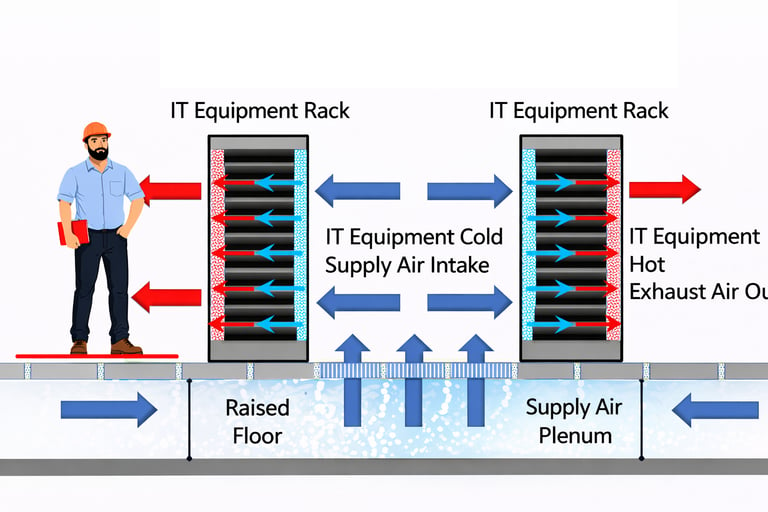
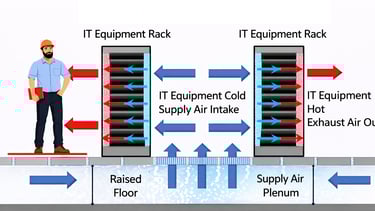
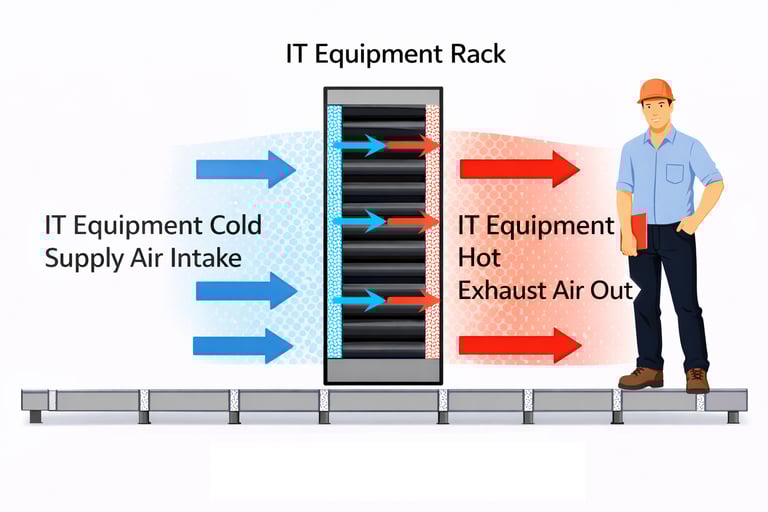
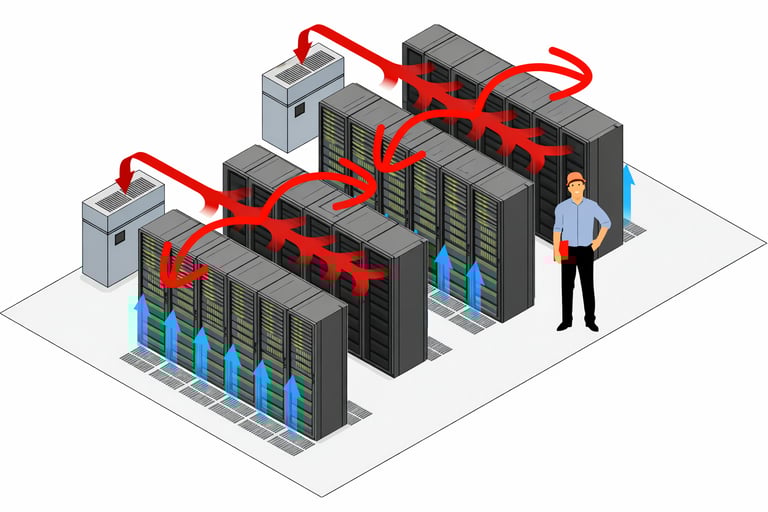
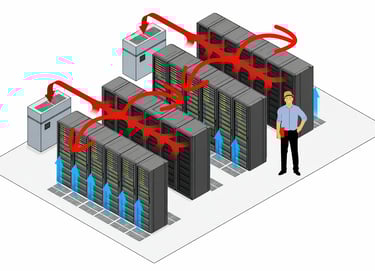
The layout of a data center strongly influences cooling performance. Servers are typically arranged in rows of racks that form hot aisles and cold aisles. Cold aisles face the front of server racks where cool air is supplied, while hot aisles face the rear where warm exhaust air exits.
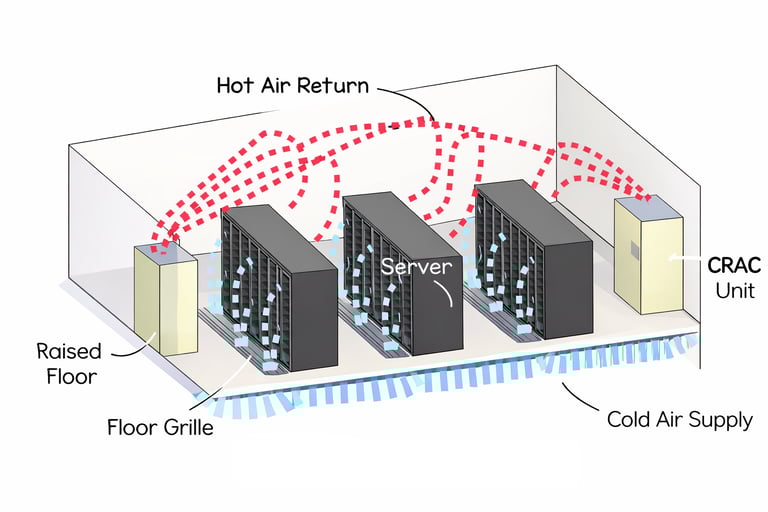
One traditional and widely used configuration is the raised floor system. In this design, a plenum space is created beneath an elevated floor. Conditioned air from cooling units is supplied into this underfloor plenum and distributed through perforated tiles into the cold aisles. The warm return air is collected above the racks and directed back to the cooling units.
The raised floor approach provides flexibility for air distribution and cable management, but it also introduces challenges. Poorly designed plenums can lead to uneven airflow, pressure losses, and air recirculation. As rack power density increases, raised floor systems often require additional containment or close-coupled cooling solutions to remain effective.
Air Cooling and Water Cooling
Air cooling is the most common cooling method in data centers. It relies on moving cold air through server racks to absorb heat and then returning the warm air to cooling units. Air cooling systems are relatively simple, safe, and cost-effective for low to medium heat densities. However, their cooling capacity is limited because air has a low heat capacity compared to liquids.
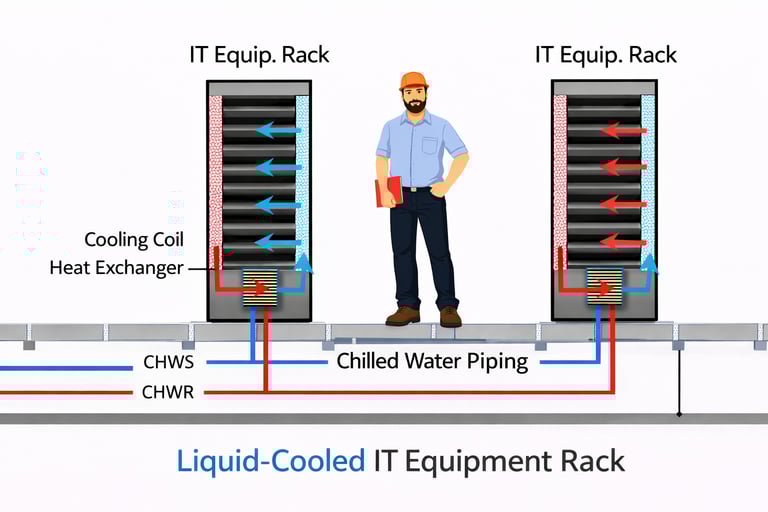
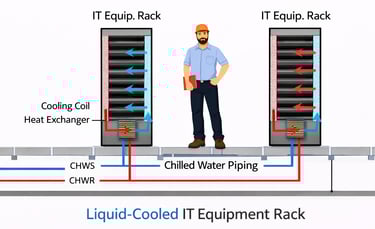
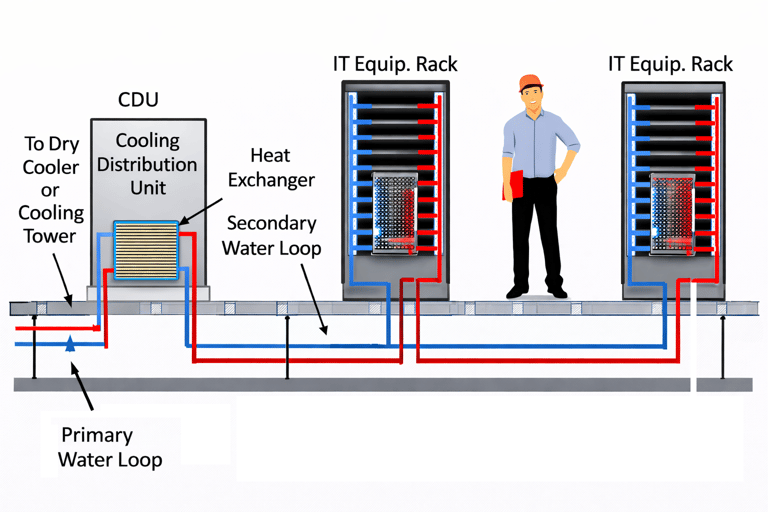
Water cooling, or liquid-based cooling, uses chilled water or other liquids to remove heat more efficiently. Water has a much higher thermal conductivity and heat capacity than air, making it suitable for high-density data centers. Water cooling can be implemented through chilled water coils in air handlers or through direct liquid cooling applied to CPUs and GPUs.
While water cooling offers higher efficiency and supports higher rack power densities, it introduces additional complexity. It requires piping networks, leak detection systems, and careful maintenance to prevent risks to sensitive electronic equipment.
CRAC and CRAH Systems
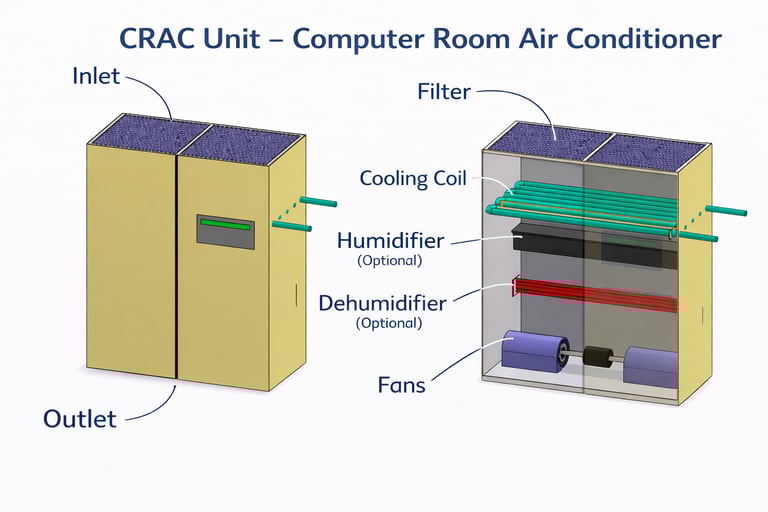
Two main types of cooling units are used in data centers: CRAC and CRAH.
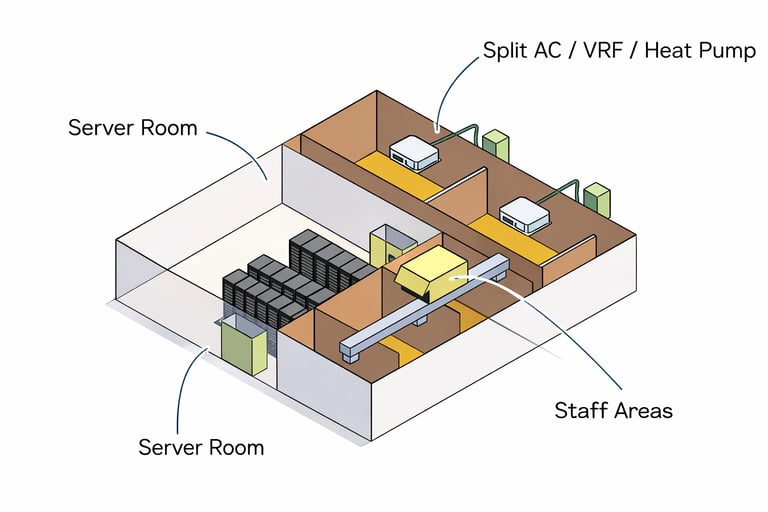
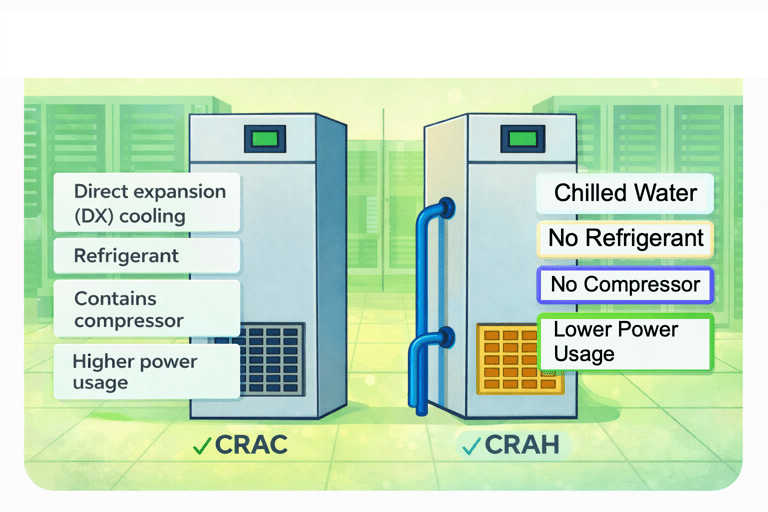
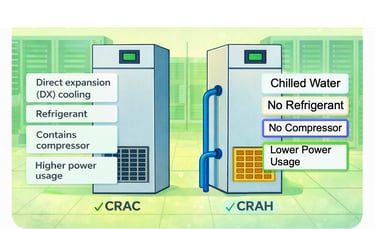
CRAC (Computer Room Air Conditioner) units use direct expansion refrigeration. They contain compressors and refrigerant circuits similar to conventional air conditioners. CRAC units are commonly used in small to medium data centers due to their simplicity and lower initial cost.
CRAH (Computer Room Air Handler) units use chilled water supplied from a central chiller plant. They consist mainly of fans and cooling coils. CRAH systems are typically more energy-efficient and suitable for large-scale data centers where centralized cooling infrastructure is available.
The choice between CRAC and CRAH depends on factors such as facility size, energy efficiency targets, available infrastructure, and redundancy requirements.
Cooling Strategy, Recirculation Problems, and Hot/Cold Aisle Containment
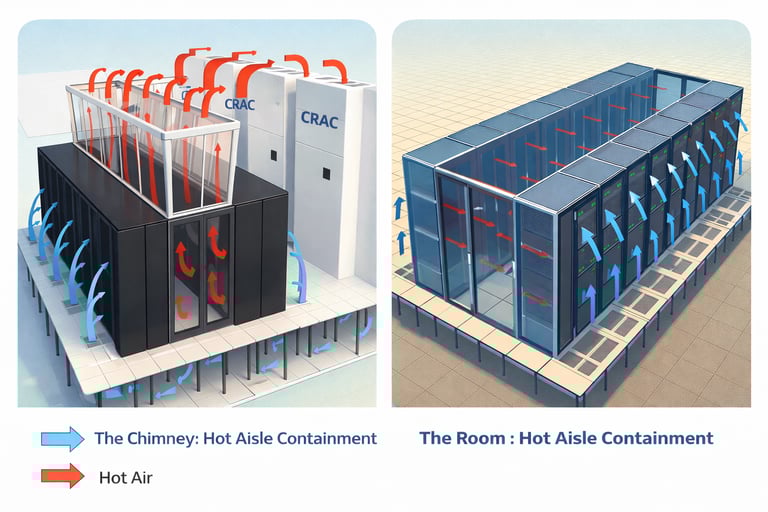
One of the main goals of data center HVAC design is to prevent the mixing of hot and cold air. When warm exhaust air from servers mixes with the cold supply air, cooling efficiency drops and hotspots can form. This phenomenon is known as air recirculation or short-circuiting.
To address this issue, hot aisle and cold aisle containment strategies are implemented. In cold aisle containment, the cold aisle is enclosed so that only cold supply air enters server intakes. In hot aisle containment, the hot exhaust aisle is enclosed and directly connected to return air paths back to the cooling units.
Both strategies significantly improve thermal control, reduce cooling energy consumption, and allow higher rack densities. Containment systems also enable better predictability of airflow and temperature distribution across the data center.
Close-Coupled Cooling: In-Row and In-Rack Cooling
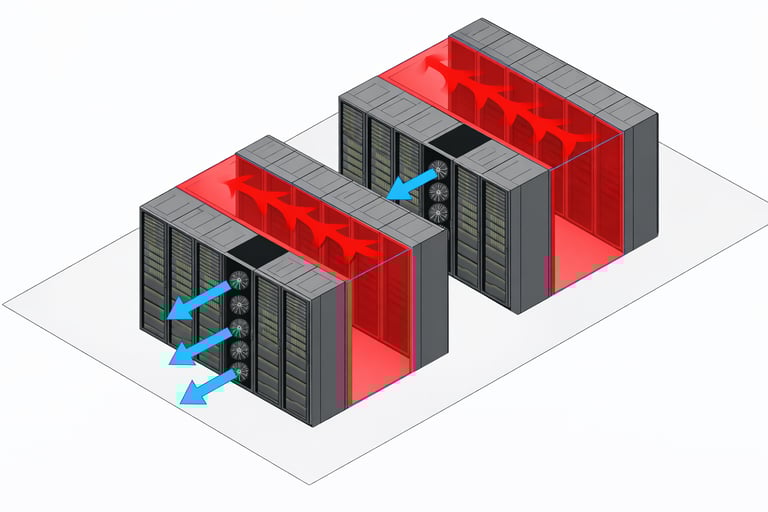
As server power density increases, traditional room-based cooling becomes less effective. Close-coupled cooling brings the cooling source closer to the heat source, reducing airflow path length and improving efficiency.
In-row cooling places cooling units directly between server racks. These units draw hot air from the hot aisle and supply cold air directly into the cold aisle or rack fronts. This approach minimizes mixing and provides targeted cooling for high-density rows.
In-rack cooling integrates cooling modules inside the server rack itself. This method is often combined with liquid cooling and is used for extremely high heat loads, such as in high-performance computing (HPC) and AI clusters. Although highly efficient, in-rack cooling requires more complex system design and careful integration with IT hardware.
CFD Simulation and tensorHVAC-Pro
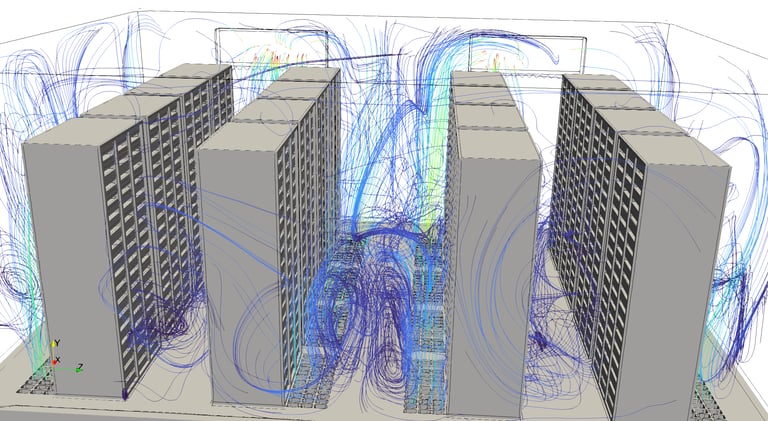
Modern data center HVAC design increasingly relies on Computational Fluid Dynamics (CFD) simulation. CFD allows engineers to model airflow, temperature distribution, pressure fields, and heat transfer throughout the data center before construction or modification.
With CFD simulation, designers can evaluate different layouts, cooling strategies, containment options, and equipment placements. It helps identify potential hotspots, recirculation zones, and inefficient airflow paths. This reduces the risk of costly design errors and improves overall system reliability and energy performance.
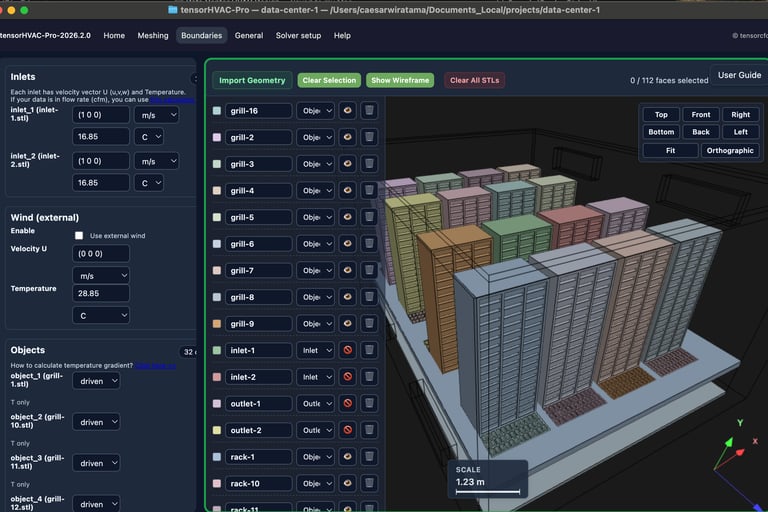
tensorHVAC-Pro is a simulation-based platform that integrates HVAC modeling and CFD analysis for data center applications. It enables engineers to test multiple cooling strategies, compare air and water cooling options, analyze raised floor versus close-coupled cooling designs, and predict thermal performance under different operating conditions.
By using CFD tools such as tensorHVAC-Pro, data center designers can move from trial-and-error approaches to data-driven, optimized HVAC system design that balances reliability, efficiency, and scalability.