
Optimizing Engine Room HVAC Thermal and Flow Design Using CFD Software
CASE-STUDIES
wiratama
10/22/20253 min read
Understanding HVAC Design Challenges in Ship's Engine Room
The engine room of any maritime vessel is a complex environment where maintaining optimal conditions is critical for operational efficiency and safety. The harsh conditions and high thermal loads necessitate an effective Heating, Ventilation, and Air Conditioning (HVAC) system designed specifically for the unique needs of marine applications. Incorporating advanced simulation techniques such as Computational Fluid Dynamics (CFD) becomes essential for achieving optimal thermal and flow design.
The Role of CFD in Enhancing HVAC System Efficiency
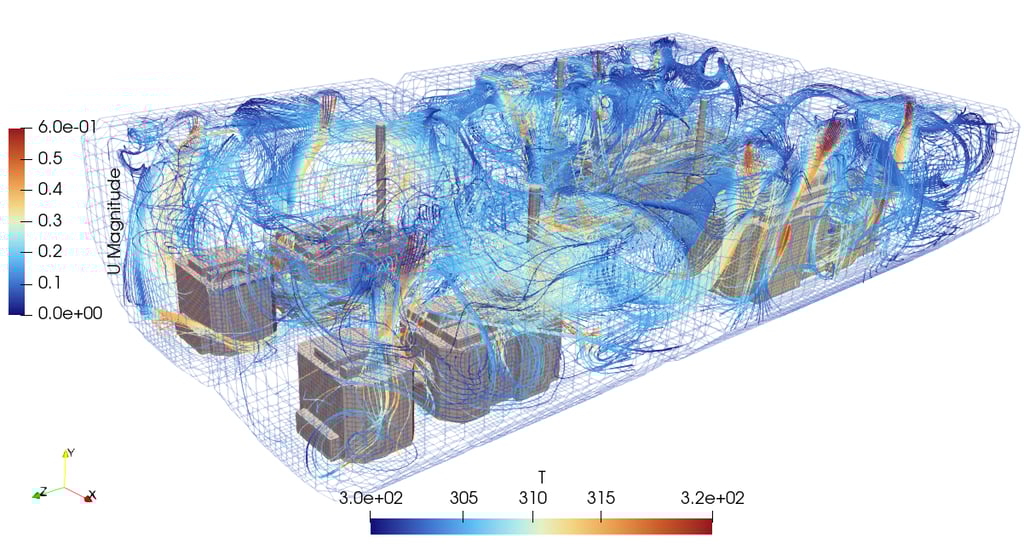
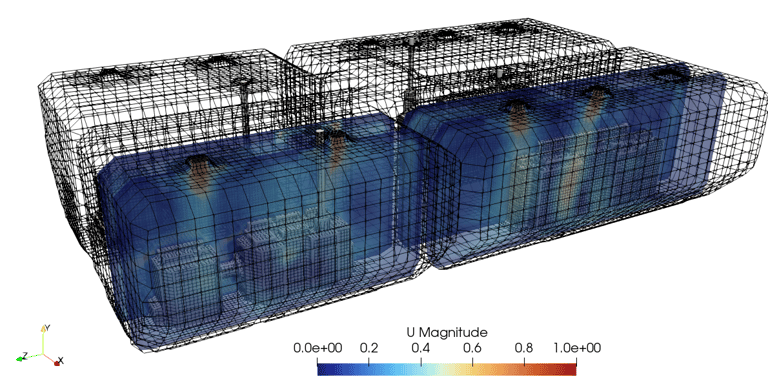
CFD software allows engineers to simulate and analyze airflow patterns, temperature distributions, and pressure changes within the engine room. By using dedicated CFD tools such as tensorHVAC-Pro, engineers can visualize how air moves throughout the space, enabling them to identify potential issues before physical implementation. This proactive approach significantly enhances the overall performance of the HVAC systems by optimizing component placement, duct configurations, and airflow rates.
Key Considerations for Effective HVAC Design in Engine Rooms
When employing CFD for engine room HVAC thermal and flow design, several key factors must be considered. Firstly, accurately modeling the heat sources within the engine room, such as engines, generators, and other machinery, is crucial. Additionally, understanding the external environmental conditions, including temperature variations and humidity, plays a vital role in developing a robust design.
Moreover, the design should accommodate any maintenance requirements, ensuring airflow accessibility to all critical components. Utilizing CFD simulations enables an iterative design process, allowing engineers to test various scenarios and refine the HVAC system until optimal performance metrics are achieved.
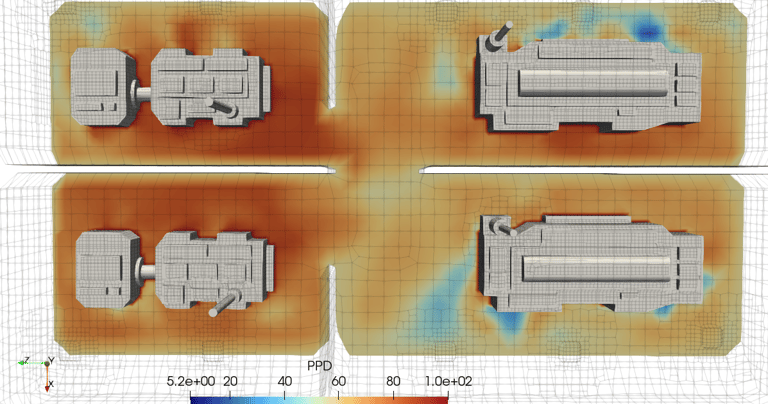
Velocity Distribution


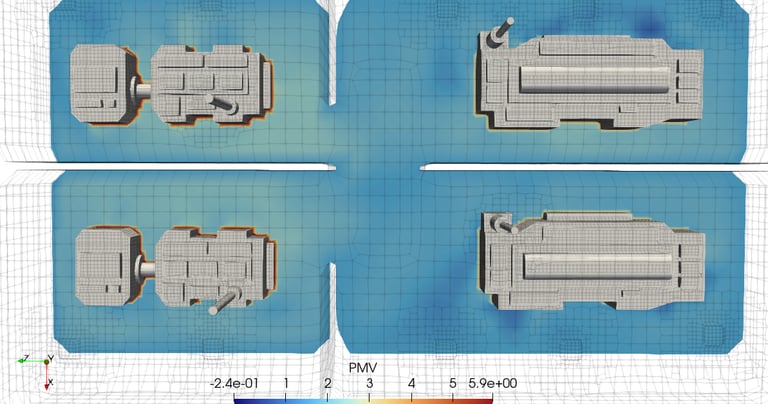
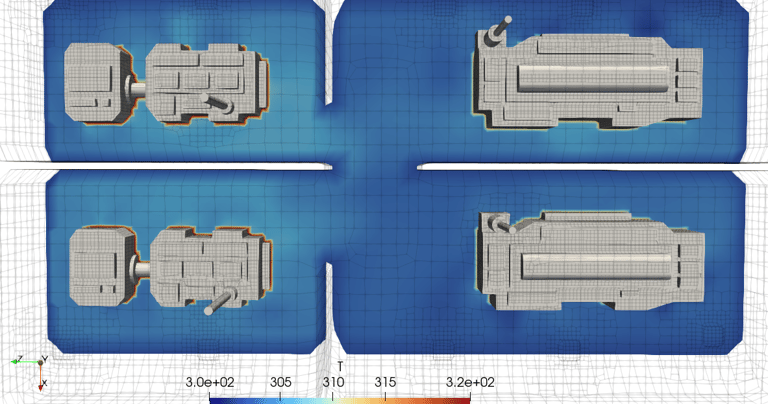
Temperature Distribution




Conclusion: The Advantages of Dedicated CFD Software
The integration of dedicated CFD software into engine room HVAC thermal and flow design presents numerous advantages. By providing comprehensive insights into airflow behavior and thermal dynamics, CFD facilitates improved decision-making and design validation. Maritime operators are increasingly adopting this technology to ensure that HVAC systems are not only compliant with safety regulations but also maximize energy efficiency.
In conclusion, harnessing CFD software for designing HVAC systems in engine rooms represents a significant advancement in marine engineering. By focusing on precise thermal management and flow dynamics, engineers can enhance operational reliability while also contributing to sustainability initiatives through reduced energy consumption and improved system performance.
The simulation above was done using tensorHVAC-Pro software, a dedicated flow and thermal HVAC simulation software, designed for intuitive and easy to use no need to be CFD expert
Other Case Studies