
External flow building ventilation simulation
Computational Fluid Dynamics (CFD) simulation of external flow around building ventilation
CASE-STUDIES
Wiratama
10/17/20252 min read
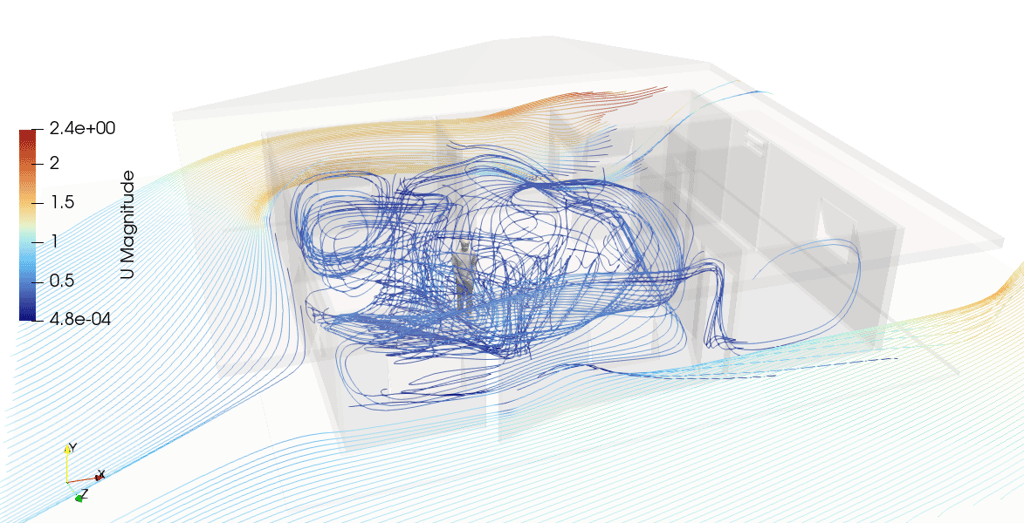
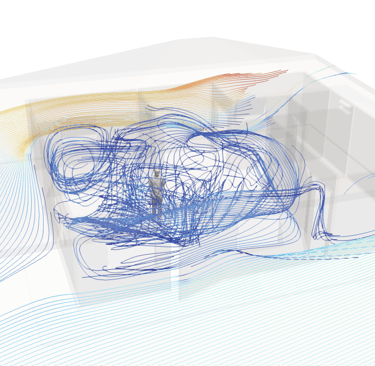
CFD Simulation of Building Ventilation from External Wind
Computational Fluid Dynamics (CFD) simulation plays a key role in evaluating natural ventilation performance in buildings driven by external wind. By simulating airflow and heat transfer, engineers can visualize how outdoor wind interacts with openings such as windows, vents, and louvers to promote air exchange and occupant comfort.
Simulation Overview
The analysis begins with modeling the building geometry and surrounding domain to capture realistic wind flow patterns. Appropriate boundary conditions—typically a logarithmic wind velocity profile and ambient temperature—are applied at the inlet, while pressure outlet conditions represent the far-field boundaries. Inside the building, thermal loads, occupants, and equipment can be defined to simulate internal heat sources.
Key Results
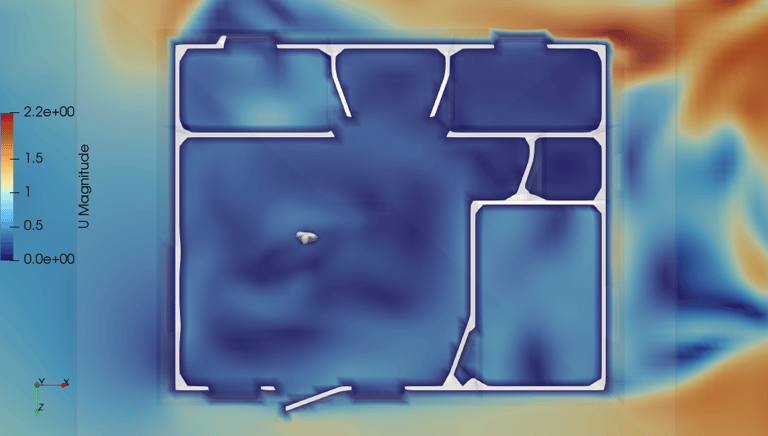
Velocity Field: Shows how external wind enters and circulates within the rooms, identifying dead zones and high-velocity regions.
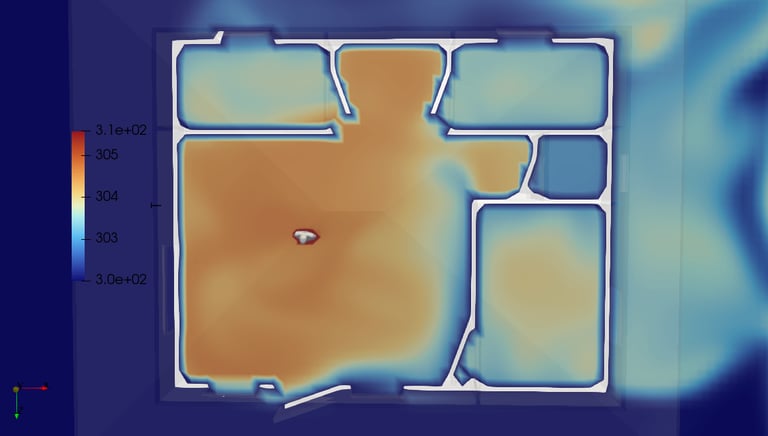
Temperature Distribution: Reveals thermal stratification and evaluates the effectiveness of natural cooling.
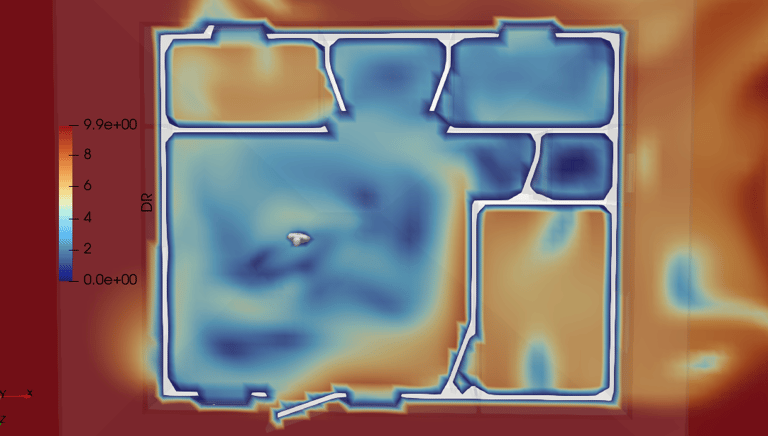
Draft Rate (DR): Quantifies discomfort due to local air movement, indicating areas with potential drafts.
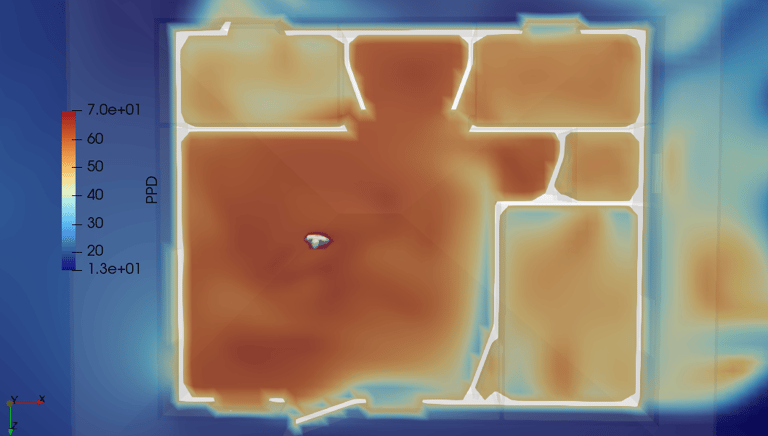
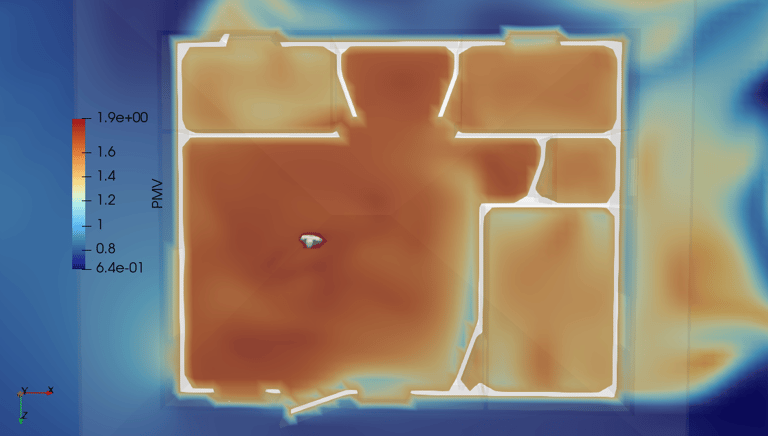
Predicted Mean Vote (PMV) and Predicted Percentage Dissatisfied (PPD): Evaluate overall thermal comfort in accordance with ISO 7730, based on local air velocity, temperature, and humidity.
Air Age: Estimates the freshness of indoor air, showing how long it takes for air to be replaced by outdoor flow—an indicator of ventilation efficiency.
Conclusion
CFD provides detailed insight into airflow behavior and thermal comfort for wind-driven ventilation design. The simulation helps architects and HVAC engineers optimize opening size, placement, and orientation to ensure sufficient air renewal, comfort, and energy efficiency—long before construction begins.
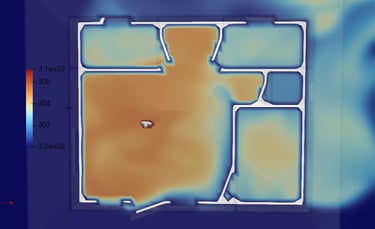
Temperature Distribution
Velocity Distribution
PPD
Air Age
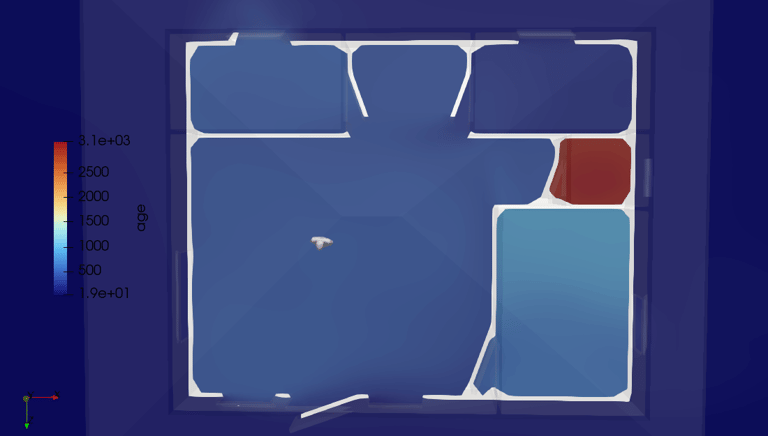
DR
PMV

The case study in this article is done using tensorHVAC-Pro software, a dedicated HVAC flow and thermal design software with intuitive and easy to use user interface designed for HVAC engineer - not CFD expert.
Other case studies