
How Central HVAC System Works
Blog post description.
ARTICLES
Wiratama
10/27/20253 min read
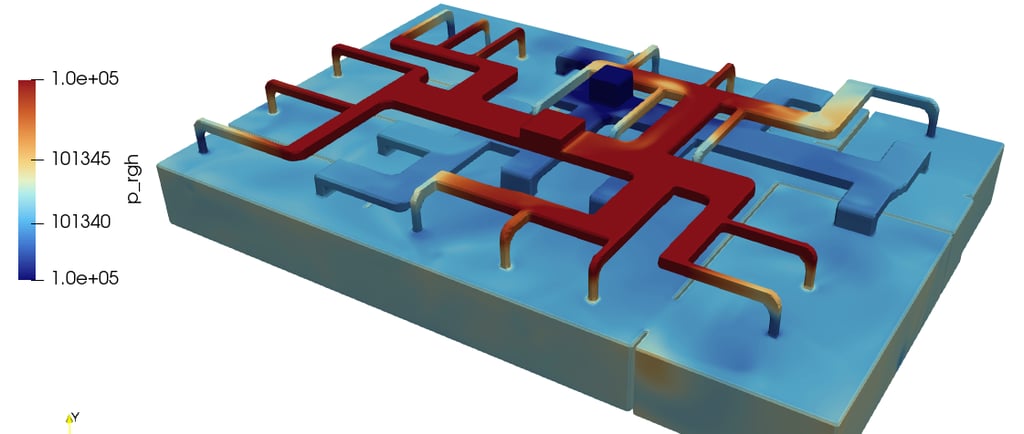
How a Central HVAC System Works
A central HVAC system (Heating, Ventilation, and Air Conditioning) is the heart of modern building climate control, designed to maintain comfortable temperature, humidity, and air quality throughout multiple rooms or zones. Unlike standalone units, a central HVAC system delivers conditioned air from one main source through ductwork, efficiently managing indoor comfort for entire buildings such as offices, malls, hospitals, or homes.
1. The Core Function of a Central HVAC System
At its core, a central HVAC system performs three main functions:
Heating — raising indoor temperature during cold seasons.
Ventilation — circulating fresh air and removing stale or contaminated air.
Cooling (Air Conditioning) — lowering temperature and controlling humidity during warm periods.
These functions are integrated to provide balanced, year-round comfort, while also ensuring good indoor air quality and energy efficiency.
2. Major Components and How They Work Together
a. Air Handling Unit (AHU)
The Air Handling Unit is the system’s main hub for air processing. It draws in air (from outside or recirculated), filters it, and conditions it through heating or cooling coils before sending it into the duct network. The AHU contains:
Fans or blowers for air movement
Filters to clean the air
Cooling and heating coils connected to chillers or boilers
Dampers to control air volume and mixing
b. Chiller and Cooling Coils
In cooling mode, the chiller removes heat from water, producing chilled water that circulates through coils in the AHU. As warm air passes over the cold coils, heat and moisture are extracted — cooling and dehumidifying the air before it enters the occupied spaces.
c. Boiler and Heating Coils
For heating, the boiler heats water or produces steam, which is sent through heating coils in the AHU. When cool air flows over these coils, it absorbs heat before being distributed into the building.
d. Ductwork System
Conditioned air travels through a network of supply ducts, which deliver air to different zones or rooms through diffusers. Return ducts collect the used air and bring it back to the AHU for reconditioning or exhaust. Proper duct design ensures uniform airflow, low pressure drop, and minimal noise.
e. Cooling Tower
In large systems, cooling towers reject unwanted heat from the chilled water loop. The tower transfers the heat from the chiller’s condenser water to the atmosphere through evaporation.
f. Controls and Sensors
Modern HVAC systems use Building Management Systems (BMS) or digital controls that automatically regulate temperature, humidity, and fan speeds. Sensors measure indoor and outdoor conditions, allowing the system to operate efficiently while maintaining occupant comfort.
3. The Process Cycle: Cooling Mode Example
The thermostat detects that the room temperature is higher than the setpoint.
The chiller activates, producing chilled water.
The AHU draws in air, passes it through filters, and then across cooling coils.
The air’s temperature and humidity drop before it’s distributed through the duct system.
Return air is either recirculated or exhausted, while fresh outdoor air is introduced to maintain ventilation.
The cooling tower expels the absorbed heat from the condenser water circuit.
The process is reversed in heating mode, with the boiler providing hot water to the AHU’s heating coils.
4. Ventilation and Air Quality
Ventilation is an integral part of central HVAC operation. The system brings in outdoor air to dilute indoor pollutants, such as CO₂ and volatile organic compounds (VOCs), while exhausting contaminated air. Some advanced systems use energy recovery ventilators (ERVs) or heat recovery ventilators (HRVs) to reclaim energy from the exhaust air, improving efficiency.
Air filters — from simple fiber filters to HEPA-grade — maintain indoor air quality by capturing dust, allergens, and microorganisms. Maintaining these filters is essential for both efficiency and health.
5. Types of Central HVAC Systems
Depending on building type and capacity, central HVAC systems may be configured as:
All-Air Systems — air is conditioned and distributed entirely through ducts (e.g., Variable Air Volume systems).
All-Water Systems — chilled or hot water is circulated to terminal units like fan coils, which condition air locally.
Air-Water Systems — a combination of both, offering flexibility and control.
Large buildings often use chiller-boiler systems, while medium-sized structures may rely on packaged rooftop units (RTUs) that integrate all components in a single assembly.
6. Energy Efficiency Considerations
Energy efficiency is a major focus in modern HVAC design. Central systems can integrate:
Variable Speed Drives (VSDs) to modulate fan and pump speeds.
Demand-Controlled Ventilation (DCV) that adjusts airflow based on occupancy.
Heat Recovery Systems to reuse waste heat.
Smart controls for predictive maintenance and performance optimization.
Simulation tools such as TensorHVAC-Pro allow engineers to analyze flow distribution, temperature patterns, and comfort indices before installation — ensuring the system meets comfort and efficiency goals.
7. Maintenance and Operation
Routine maintenance ensures reliability and longevity:
Cleaning filters and coils
Checking refrigerant and water levels
Inspecting fans, belts, and pumps
Calibrating sensors and control systems
Regular performance monitoring through digital dashboards or IoT-based sensors helps detect inefficiencies early, preventing costly downtime.
Read other articles..