
How Human Thermoregulation Works and How Its Related to Comfort
How Human Thermoregulation Works and How Its Related to Comfort
ARTICLES
Wiratama
12/20/20252 min read
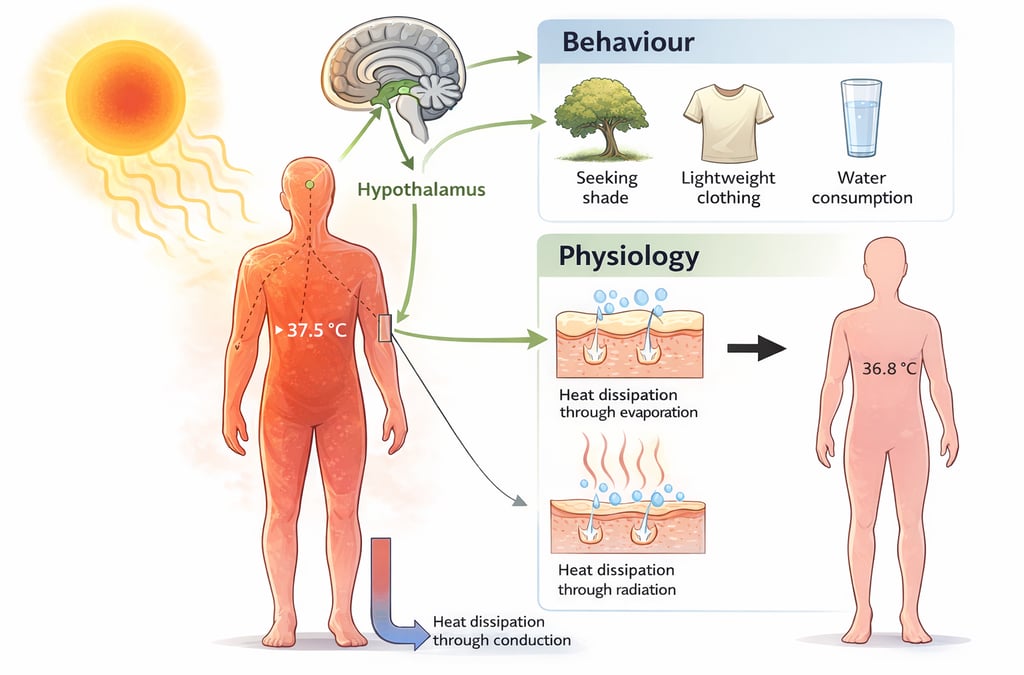
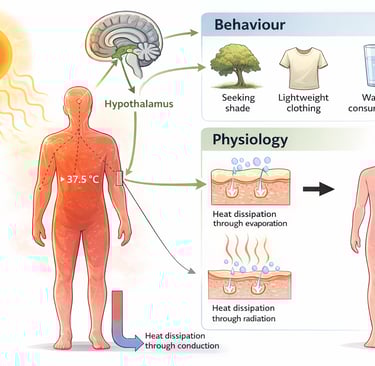
Human thermoregulation is the body’s natural ability to maintain a stable internal temperature despite changes in the surrounding environment. For a healthy adult, this core temperature is typically maintained around 36.5–37.5°C. This regulation is essential for survival, as even small deviations can significantly affect physical performance, cognitive function, and overall comfort.
The central control of thermoregulation lies in the hypothalamus, a small but critical region of the brain. The hypothalamus acts as the body’s temperature control center by continuously receiving signals from temperature sensors located in the skin and within the body’s core. By comparing the sensed temperature with the desired set point, it determines whether the body needs to gain or lose heat and then activates appropriate responses.
When the body is exposed to a hot environment or produces excess metabolic heat, the hypothalamus initiates mechanisms to release heat. One of the most important physiological responses is sweating. As sweat evaporates from the skin surface, it removes heat from the body, providing an effective cooling mechanism. In addition to evaporation, the body also loses heat through radiation, where heat is emitted from the skin to cooler surrounding surfaces, and through conduction, where heat is transferred directly to objects in contact with the body.
Thermoregulation also involves behavioral responses, which are often the first line of defense against thermal discomfort. When people feel too warm, they instinctively seek shade, reduce physical activity, wear lighter clothing, or increase water intake. These actions reduce heat gain or support the body’s cooling mechanisms, complementing physiological responses. Behavioral adaptation is particularly important because it can significantly reduce the strain on the body’s internal control systems.
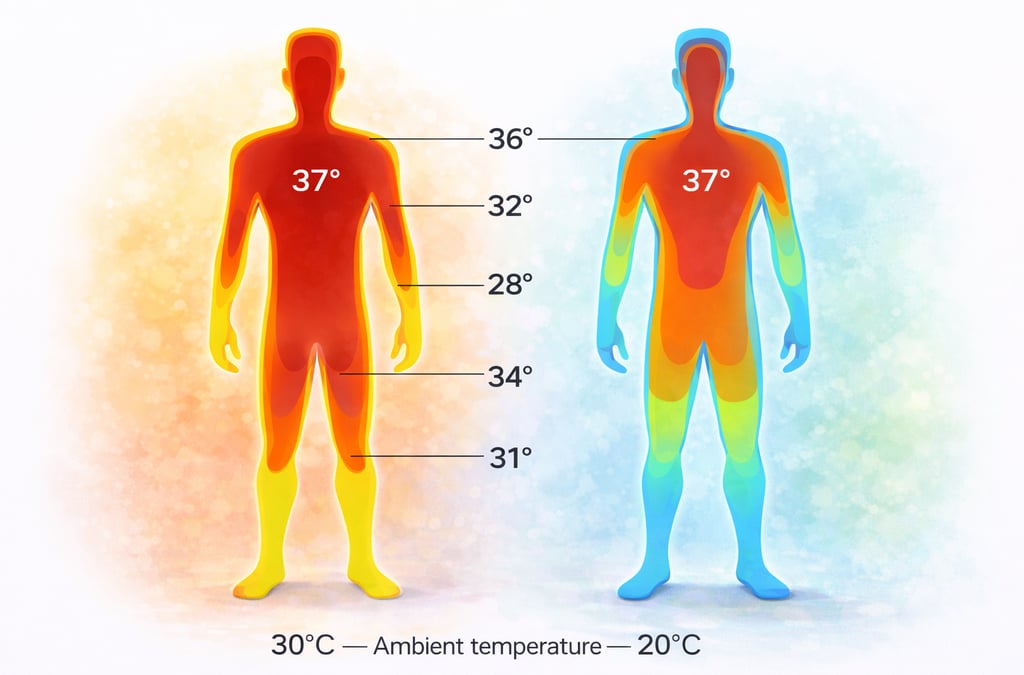
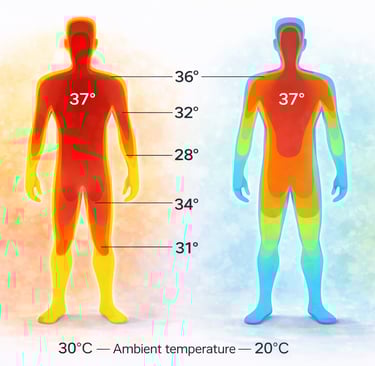
As heat is dissipated effectively, the body temperature gradually returns toward its normal range. This restoration is crucial for maintaining thermal comfort, which is the condition in which a person feels neither too hot nor too cold. Thermal comfort is not determined by body temperature alone but is the result of a balance between internal heat production, heat loss mechanisms, and environmental factors such as air temperature, humidity, air movement, and radiant heat.
The relationship between thermoregulation and comfort becomes especially clear in environments with high humidity. Although sweating still occurs, high humidity slows down evaporation, reducing the effectiveness of cooling. As a result, the body struggles to release heat, leading to a sensation of discomfort even when the air temperature is not extremely high. Conversely, in very dry conditions, evaporation can occur too rapidly, sometimes causing dryness and irritation, which also reduces comfort.
In indoor environments, such as homes, offices, and public buildings, thermal comfort depends on how well the surrounding conditions support the body’s thermoregulatory processes. Heating, ventilation, and air-conditioning systems are designed to maintain air temperature, humidity, and airflow within ranges that allow the body to regulate heat efficiently with minimal physiological effort. When these systems are poorly designed or improperly operated, occupants may experience discomfort, fatigue, or reduced productivity.
In summary, human thermoregulation is a complex interaction between the brain, the body, and the environment. The hypothalamus coordinates physiological and behavioral responses to maintain a stable internal temperature, while environmental conditions determine how effectively these responses work. Thermal comfort is achieved when the body can regulate heat without stress, highlighting why proper control of temperature, humidity, and airflow is essential in both natural and built environments.