
How HVAC Design can Improve your Building Energy Efficiency
Thoughtful HVAC design is essential for energy-efficient, comfortable, and sustainable buildings. It balances environmental goals with practical performance — ensuring every component works harmoniously to reduce costs and emissions.
ARTICLES
Wiratama
11/3/20253 min read
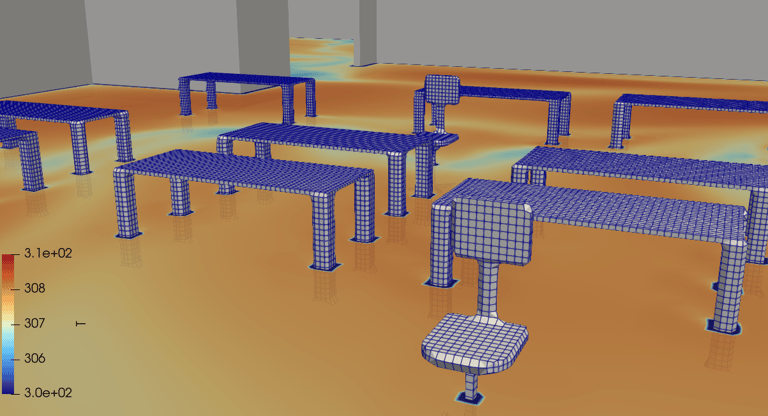
Energy-Efficient HVAC Design: The Key to Sustainable and Comfortable Buildings
HVAC systems are the core of a building’s environmental control, influencing comfort, energy use, and overall operational efficiency. Designing an energy-efficient HVAC system allows buildings to maintain ideal indoor conditions while minimizing energy consumption and maintenance costs. Every design decision — from equipment selection to airflow distribution — impacts system reliability, performance, and sustainability, ensuring long-term efficiency across different building types.
Beyond reducing energy bills, HVAC design directly affects indoor air quality and occupant well-being. By integrating advanced design strategies and simulation tools, engineers can improve comfort, enhance sustainability, and support green building goals. Skilled HVAC engineers play a vital role in turning these goals into practical solutions that balance performance and efficiency.
To simplify this process, tensorHVAC-Pro offers a dedicated flow and thermal simulation platform built specifically for HVAC engineers. Unlike general-purpose CFD software, tensorHVAC-Pro focuses on airflow, temperature, and comfort analysis (PMV, PPD, air age) with an intuitive, easy-to-use interface. It enables engineers to test ventilation layouts, optimize thermal comfort, and validate compliance with ASHRAE 55 or EN 15251 — all without the steep learning curve of traditional CFD tools.
What Is HVAC Design and Why Does It Matter for Energy Efficiency?
HVAC design focuses on the planning, sizing, and integration of heating, ventilation, and air-conditioning systems to create efficient and comfortable environments. A well-designed system balances energy use, airflow, and reliability, ensuring buildings maintain comfort with minimal waste.
Here’s how thoughtful HVAC design enhances energy performance:
Accurately sizes equipment to meet building load requirements.
Balances airflow and temperature distribution for consistent comfort.
Integrates smart controls for real-time energy optimization.
Extends equipment lifespan through better layout and design.
Ensures compliance with performance and sustainability standards.
Enables data-driven monitoring for efficiency improvements.
By combining proper design principles with simulation tools like tensorHVAC-Pro, engineers can visualize how systems behave before installation — preventing energy waste and costly redesigns.
How Proper HVAC Design Reduces Energy Use and Costs
Efficient HVAC design minimizes wasted energy while maintaining consistent indoor comfort. By leveraging CFD-based tools like tensorHVAC-Pro, engineers can evaluate airflow, pressure drop, and temperature distribution to fine-tune layouts before construction.
Key strategies for reducing HVAC energy consumption include:
Selecting properly sized and efficient equipment.
Using automated controls to match occupancy and demand.
Implementing zoning for targeted temperature control.
Managing airflow to minimize recirculation losses.
Conducting preventive maintenance for reliable operation.
Incorporating insulation to limit heat transfer losses.
Through these approaches, buildings become more energy-efficient, sustainable, and cost-effective over time.
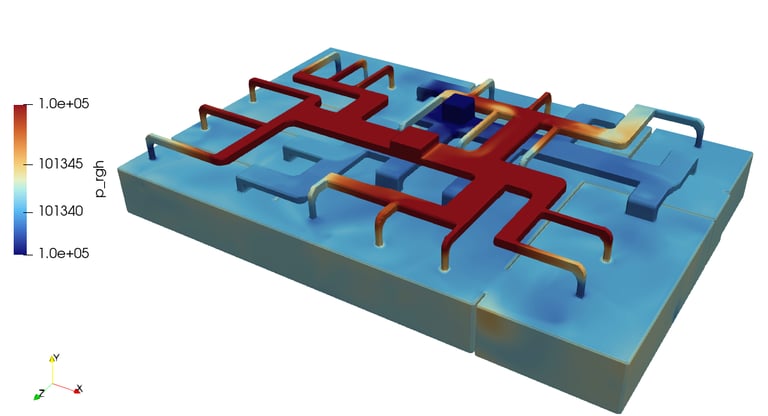
HVAC’s Role in Indoor Air Quality and Thermal Comfort
A well-designed HVAC system ensures clean air, stable temperature, and proper humidity, directly influencing occupant comfort and health. Using tensorHVAC-Pro, engineers can simulate air movement, predict thermal comfort indices, and identify poorly ventilated zones.
Key benefits include:
Removing pollutants through optimized air filtration.
Managing humidity for comfort and mold prevention.
Maintaining uniform temperature across rooms.
Balancing fresh air supply and exhaust airflow.
Ensuring reliability through continuous system monitoring.
Such predictive analysis supports both comfort and energy performance, ensuring HVAC systems deliver healthy, efficient environments.
Sustainable Design Strategies to Improve HVAC Efficiency
Sustainability plays a central role in modern HVAC design. Integrating energy-efficient technologies and smart simulation tools helps reduce power consumption while improving system performance.
Effective strategies include:
Choosing high-efficiency equipment to minimize energy use.
Designing optimized system layouts to reduce resistance and improve airflow.
Using smart sensors and automation to adapt to occupancy changes.
Conducting regular maintenance to sustain long-term performance.
Simulating design variations in tensorHVAC-Pro to find the most efficient configuration.
These steps create sustainable, resilient, and regulation-compliant systems that align with ASHRAE and LEED energy standards.
How BIM and CFD Integration Enhance HVAC Design
Building Information Modeling (BIM) combined with CFD simulation offers HVAC engineers powerful tools to coordinate design and performance. BIM supports accurate modeling, while tensorHVAC-Pro enables realistic airflow and thermal analysis directly from 3D layouts.
With this combination, engineers can:
Detect and resolve conflicts early through visualization.
Optimize ductwork, piping, and airflow pathways.
Simulate energy performance under real-world conditions.
Collaborate seamlessly with architects and contractors.
Evaluate long-term system performance digitally.
This integration leads to smarter decisions, reduced errors, and better-performing HVAC systems.
Conclusion
Thoughtful HVAC design is the cornerstone of energy-efficient and sustainable buildings. With tools like tensorHVAC-Pro, engineers can go beyond traditional calculations — simulating airflow, thermal comfort, and ventilation performance with precision.
By combining expert design, simulation-driven validation, and sustainable strategies, HVAC professionals can deliver buildings that are comfortable, efficient, and future-ready.
tensorHVAC-Pro makes it simple — powerful CFD insights, designed for HVAC engineers.
tensorHVAC-Pro is a dedicated HVAC flow and thermal simulation software, Intuitive and easy to use, designed for HVAC engineers - not CFD expert. Learn more..
Download pdf version
Read more articles..