
How Interior Designers Can Improve Their Skills by Mastering Flow and Thermal Simulation
Mastering flow and thermal simulation empowers interior designers to design with both emotion and precision — turning every project into a space that breathes, moves, and lives beautifully.
ARTICLES
Wiratama
11/1/20253 min read
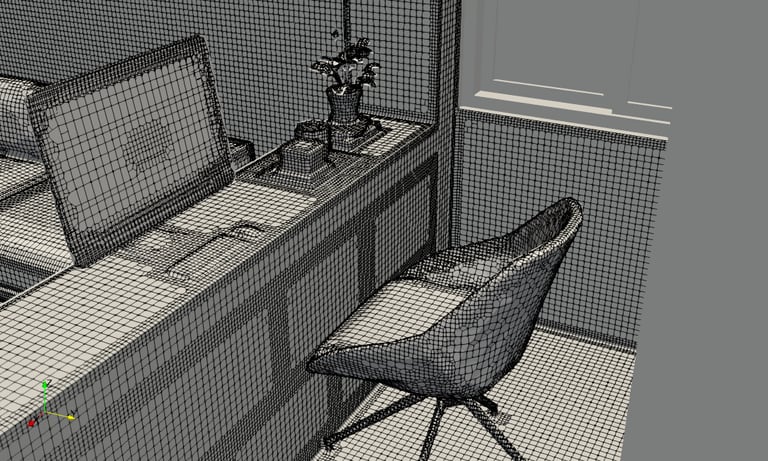
How Interior Designers Can Improve Their Skills by Mastering Flow and Thermal Simulation
In modern architecture, great design goes beyond aesthetics — it’s about how people feel in a space. While color, texture, and layout define the visual experience, airflow, temperature, and comfort define how livable that space truly is. For interior designers, understanding the science of indoor comfort through flow and thermal simulation opens up a new level of design intelligence and performance.
Design Is Not Just What You See — It’s What You Feel
When you step into a room, your comfort isn’t determined only by how it looks — it’s also about how the air moves, how warm or cool it feels, and whether the environment is fresh or stuffy. These invisible elements are shaped by airflow patterns, ventilation rates, and heat distribution — factors traditionally handled by HVAC engineers.
But as interior design increasingly merges with sustainability, wellness, and smart living concepts, designers who can visualize airflow and temperature gain a powerful advantage. This is where Computational Fluid Dynamics (CFD) tools, such as tensorHVAC-Pro, come into play.
What Is Flow and Thermal Simulation?
Flow and thermal simulation uses CFD technology to digitally model how air moves and heat transfers within an indoor space.
It can show:
Air velocity distribution — how air travels around furniture or partitions
Temperature gradients — identifying hot or cold zones
Air age and freshness — showing how quickly air is replaced in each zone
Comfort parameters such as PMV (Predicted Mean Vote) and PPD (Predicted Percentage of Dissatisfied)
By mastering these simulations, interior designers can predict how design choices affect occupant comfort — long before the space is built.
Why Interior Designers Should Learn Flow and Thermal Simulation
Design for True Comfort
You can visualize whether air from an AC diffuser reaches the seating area, or if lighting and materials cause unwanted heat accumulation. Instead of guessing, you design with precision.Enhance Collaboration with HVAC Engineers
Designers who understand airflow can communicate better with mechanical engineers, suggesting design modifications that support both aesthetic and technical goals.Avoid Hidden Comfort Issues
CFD simulations reveal comfort problems that are invisible in 3D renderings — such as stagnant air zones, excessive drafts, or overheating areas near glass façades.Optimize Space Layouts
By simulating air movement, designers can strategically place furniture, partitions, or decorative elements without disrupting ventilation performance.Design Energy-Efficient Interiors
Good airflow and temperature balance reduce HVAC energy consumption. A simulation-driven design approach supports green building and sustainability certifications like LEED and WELL.Stand Out Professionally
In a competitive industry, designers who combine artistic sensibility with technical insight are more valuable. CFD mastery sets you apart as a performance-conscious designer who understands both form and function.
Practical Examples of Simulation in Interior Design
Office Spaces: Identify areas of thermal discomfort caused by lighting, computers, or poor ventilation — and redesign layouts to maintain even comfort across all desks.
Luxury Residences: Optimize diffuser placement to eliminate hot or cold spots, ensuring a consistent temperature experience.
Restaurants and Cafés: Simulate kitchen exhaust flow to prevent odors from spreading into dining areas.
Retail Spaces: Use airflow visualization to create thermally comfortable zones that encourage longer customer visits.
Art Galleries or Museums: Protect artworks by maintaining stable temperature and humidity distribution across the exhibition area.
tensorHVAC-Pro: Making Simulation Accessible to Designers
Traditionally, CFD simulation required expert engineers and complex software. However, tensorHVAC-Pro changes that by offering a dedicated, easy-to-use platform for flow and thermal HVAC simulation — designed for building and interior professionals.
With tensorHVAC-Pro, interior designers can:
Import simple room geometries or design layouts
Simulate airflow and thermal comfort automatically
Visualize temperature, velocity, and comfort maps in seconds
Evaluate design choices like diffuser placement, furniture arrangements, and lighting heat impact
This allows designers to see the invisible — transforming comfort and energy efficiency into tangible design features.
How to Start Learning
Understand Basic HVAC Concepts
Learn how supply air, return air, and diffusers work within interior spaces.Take a CFD or HVAC Simulation Course
Many online platforms offer introductory modules for non-engineers.Experiment with tensorHVAC-Pro
Run small-scale simulations for your design projects and observe how furniture, materials, and openings affect air distribution.Collaborate with Engineers
Partner with HVAC consultants to validate your simulation insights and refine your design approach.
The Future of Interior Design Is Performance-Driven
Tomorrow’s clients expect more than beauty — they want comfort, health, and sustainability. By mastering flow and thermal simulation, interior designers can bridge the gap between artistic creativity and environmental performance.
With tools like tensorHVAC-Pro, designers can create spaces that not only look stunning but feel just right — achieving harmony between architecture, comfort, and human experience.
In short:
Mastering flow and thermal simulation empowers interior designers to design with both emotion and precision — turning every project into a space that breathes, moves, and lives beautifully.
tensorHVAC-Pro is a dedicated HVAC flow and thermal simulation software, Intuitive and easy to use, designed for HVAC engineers - not CFD expert. Learn more..
Read more articles..