
How to Make Buildings Breathe Naturally Without Wasting Energy
Natural ventilation is one of the oldest and most efficient forms of climate control, yet in the age of mechanical systems, it’s often overlooked or misunderstood. The challenge lies in balancing comfort and efficiency
ARTICLES
Wiratama
10/14/20252 min read
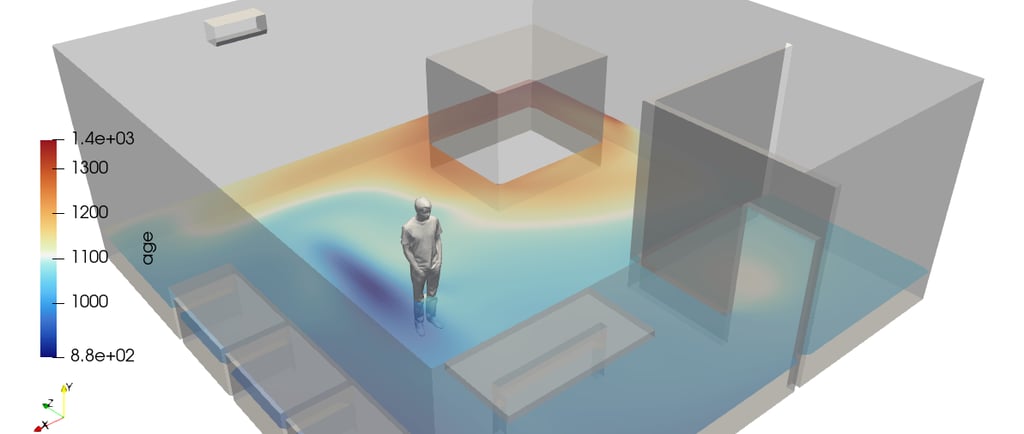
When Airflow Becomes Architecture
Modern buildings are designed to impress — but are they designed to breathe?
Natural ventilation is one of the oldest and most efficient forms of climate control, yet in the age of mechanical systems, it’s often overlooked or misunderstood.
The challenge lies in balancing comfort and efficiency: how do you let buildings breathe freely without losing energy?
With TensorHVAC-Pro, engineers and designers can find that balance through simulation — making natural ventilation both predictable and powerful.
1. The Promise of Natural Ventilation
Natural ventilation uses the forces of nature — wind pressure and temperature difference — to move air through a building.
It replaces stale indoor air with fresh outdoor air, improving occupant well-being while reducing energy use.
But designing an effective natural ventilation system isn’t as simple as placing windows and vents. Air is dynamic. It flows around obstacles, follows pressure gradients, and interacts with heat sources.
That’s why simulation is essential.
2. The Hidden Forces That Drive Air Movement
In real buildings, air moves because of two main forces:
Wind pressure: Wind hitting the building creates zones of positive and negative pressure, driving air in and out through openings.
Buoyancy (stack effect): Warm air rises and escapes through higher openings, pulling cooler air in from below.
TensorHVAC-Pro lets engineers simulate both effects to see how natural forces interact with architecture — so you can design openings, atriums, and vents that work with the wind, not against it.
3. Visualize How Buildings “Breathe”
With traditional design tools, airflow behavior is invisible. You can estimate flow rates but can’t see how air travels from one zone to another.
Using TensorHVAC-Pro, engineers can visualize the entire breathing process:
How wind enters and exits through facades
How hot air rises and escapes through roof vents
How air mixes within large atriums or open spaces
These visualizations reveal if fresh air actually reaches the occupied zones — and where stagnant or overheated pockets may form.
4. Optimize Comfort Without Adding Energy Cost
Natural ventilation saves energy only when it’s controlled intelligently.
Simulation helps you find:
The ideal size and placement of vents and louvers
The right combination of mechanical assist (fans) and natural airflow
How to maintain comfort during low-wind or extreme weather conditions
By using TensorHVAC-Pro, you can design hybrid systems that reduce fan energy while keeping occupants comfortable year-round.
5. From Sustainable to Smart Design
Sustainability isn’t just about using less — it’s about designing better.
When engineers can see and measure how air behaves naturally, they can make confident design choices that reduce mechanical load, cut energy bills, and improve indoor air quality.
With TensorHVAC-Pro, natural ventilation design becomes a science — not guesswork.
6. Turning Vision Into Performance
Architects dream of open, naturally ventilated spaces.
Engineers make those dreams work — and simulation is the bridge between vision and performance.
TensorHVAC-Pro lets you test different designs quickly, validate ideas early, and communicate airflow behavior visually to clients and architects alike.
It ensures that buildings don’t just look good — they breathe efficiently.
Design Buildings That Breathe
Natural ventilation is the art of letting air do the work — and simulation is how you perfect it.
With TensorHVAC-Pro, you can design sustainable buildings that stay cool, comfortable, and energy-efficient using the power of nature itself.
✅ Harness nature. Simulate performance. Design smarter.
That’s how TensorHVAC-Pro helps engineers make buildings breathe — naturally and efficiently.