
Indoor Building Comfort thermal and flow simulation
Simulating indoor building comfort thermal and flow using Computational Fluid Dynamics software
CASE-STUDIES
Wiratama
10/17/20252 min read
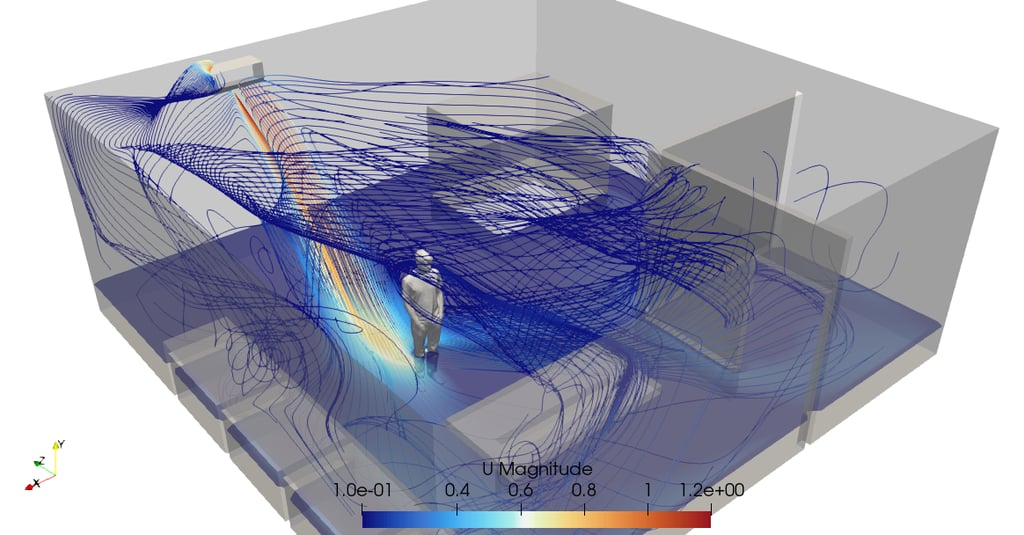
Designing Better Indoor Comfort with CFD Simulation for HVAC
Creating a comfortable indoor environment goes beyond sizing air conditioners and ducts — it requires understanding how air actually moves and behaves inside a building. Computational Fluid Dynamics (CFD) provides engineers with a powerful tool to visualize and optimize airflow and temperature distribution before installation begins.
Flow and Thermal Analysis for HVAC
Through CFD simulation, airflow velocity and temperature fields can be accurately predicted across the entire indoor space. These simulations help identify zones of stagnation, excessive drafts, or uneven temperature distribution that often lead to occupant discomfort or energy inefficiency. By modeling supply diffusers, return vents, and obstructions such as furniture or partitions, designers can evaluate multiple configurations and select the most efficient one.
Comfort Parameters: PMV, DR, and PD
Beyond flow and thermal fields, modern HVAC CFD simulations can compute comfort indices such as:
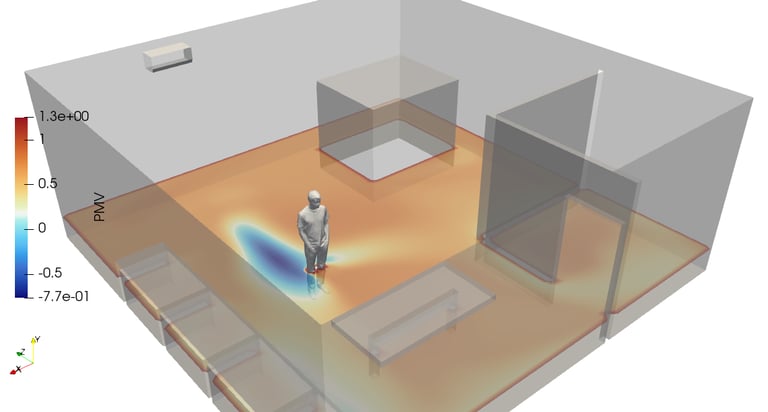
PMV (Predicted Mean Vote) – estimates overall thermal comfort based on temperature, humidity, air velocity, and clothing level.
DR (Draught Rate) – quantifies the risk of discomfort from unwanted air movement or drafts.
PD (Percentage Dissatisfied) – indicates how many occupants may feel uncomfortable due to non-uniform conditions.
These parameters allow engineers to assess not only energy performance but also occupant well-being.
Toward Smarter Indoor Environments
By integrating velocity, temperature, and air age analysis with comfort indices, CFD enables a data-driven design approach for HVAC systems. The result is an optimized indoor environment that ensures better air quality, improved comfort, and reduced energy costs — all verified virtually before construction begins.
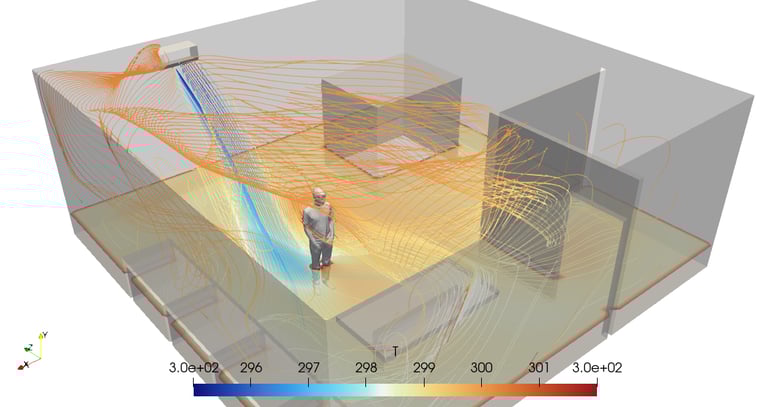
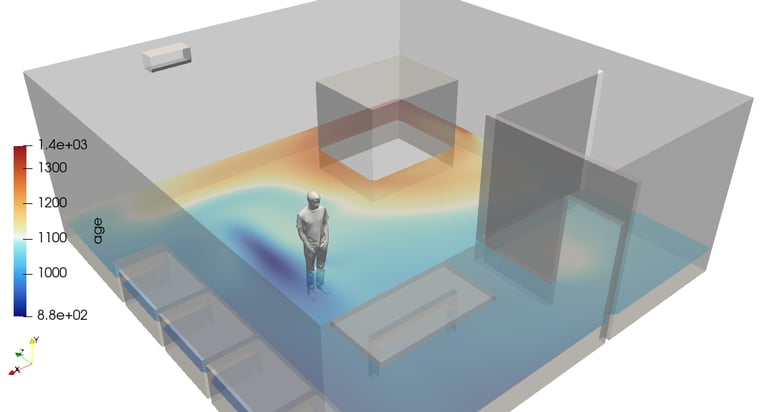
temperature
Air Age
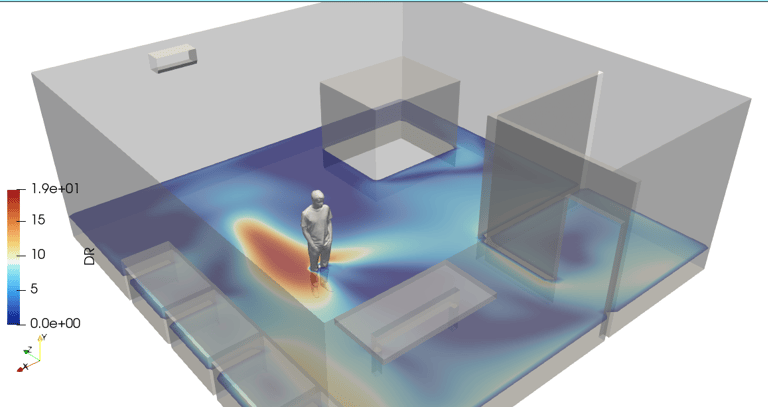
DR Distribution
PMV Distribution

The case study in this article is done using tensorHVAC-Pro software, a dedicated HVAC flow and thermal design software with intuitive and easy to use user interface designed for HVAC engineer - not CFD expert.
Read more case studies