
Lawson Wind Comfort Criteria
Lawson Wind Comfort Criteria
ARTICLES
Wiratama
12/2/20253 min read
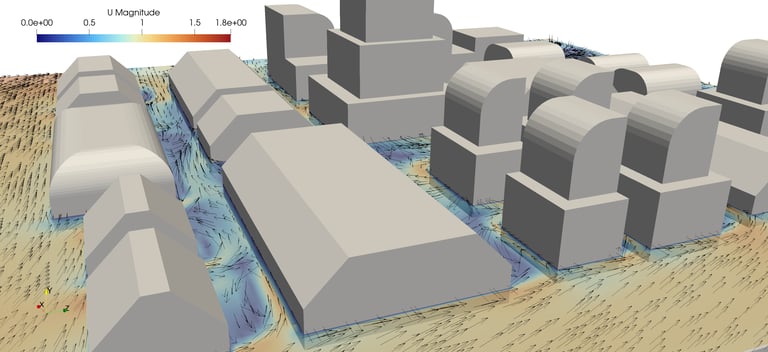
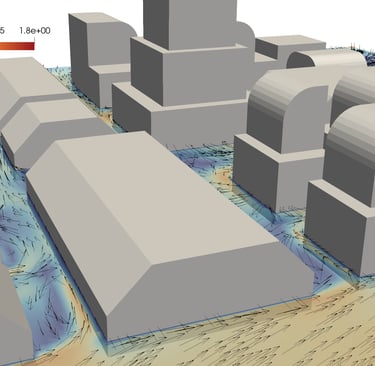
Pedestrian wind comfort plays a vital role in shaping safe, pleasant, and functional urban environments. It is driven by research into how people experience wind at ground level under different conditions and activities. To assess comfort accurately, local wind conditions must be related to meteorological wind statistics gathered over long periods. By linking local simulated wind speeds to weather station data, engineers evaluate the probability that conditions at a given pedestrian height exceed specific comfort thresholds. Since terrain, climate, architectural density, and cultural expectations vary widely across the globe, no single universal comfort criterion exists. However, standards such as the Lawson approach have been widely adopted to guide evaluation.
The Lawson wind comfort criteria define comfort levels by connecting wind-speed thresholds with the likelihood of those thresholds being exceeded. The analysis is usually conducted at pedestrian height—typically between 1.5 and 1.75 meters—and serves as a means of mapping comfort categories based on intended use. Each category corresponds to activities such as sitting, standing, strolling, or brisk walking, with stricter thresholds applying to calmer uses like outdoor dining. Historical weather data, measured across multiple wind directions, forms the probability basis used for the assessment. At each study point, simulations determine local wind speeds, which are then scaled with meteorological terrain factors to ensure realistic conditions that account for surrounding buildings, vegetation, or other surface features.
Different subsets of the Lawson criteria exist to address regional expectations and regulatory specifics. The original version defines five comfort categories, each based on a 2% exceedance probability. Locations deemed “uncomfortable” are those where wind speeds greater than 7.6 m/s are expected more than 2% of the time. Such areas may pose concerns for pedestrians or cyclists and often require mitigation. By contrast, areas meeting calmer thresholds—which range downward from 5.3 to 1.8 m/s—represent zones where airflow remains within acceptable limits for activities such as sitting or standing comfortably.
Expanded versions, such as those that incorporate additional levels or modified probability limits, allow finer distinctions of urban usability. Some variants introduce “unsafe” designations for locations that might experience high wind speeds beyond an extremely small probability threshold. These zones call for protective measures in walkways, entrances, or areas with frequent foot traffic. Other classifications define intermediate conditions as acceptable or restricted depending on intended function. For example, an area that meets criteria for fast walking may be entirely inappropriate for outdoor dining or waiting areas but acceptable for open plazas or transitional circulation zones.
Still other adaptations refine expected activities, differentiating frequent seating, occasional rest, standing, walking, or high-mobility usage. Each category pairs a threshold wind speed with a probability ceiling, and the highest fulfilled condition becomes the comfort designation for that point. By applying this evaluation grid across an entire site and for multiple wind directions, planners build a complete comfort map, identifying where interventions such as building shaping, barrier placement, landscaping, or porosity adjustments may be required.
The result is a framework that links atmospheric behavior to safety, comfort, and urban usability. Lawson criteria draw from CFD simulation, meteorological data, terrain amplification factors, and statistical exceedance to define zones where people can safely remain, dine, wait, stroll, or cycle. These insights help shape building orientation, façade geometry, tower spacing, podium massing, and even the selection of trees or screens. In dense city districts, small form adjustments can produce measurable improvement in wind flow, reducing local gust effects and strengthening overall public experience.
Ultimately, the Lawson approach equips architects and engineers with quantifiable wind comfort categories rooted in simulation and environmental statistics. Rather than relying on visual intuition alone, project teams use these criteria to validate urban design concepts, inform planning discussions, and ensure safe pedestrian conditions. From expansive plazas to sheltered courtyards, the methodology supports decisions that balance wind dynamics with landscape, architectural vision, and human comfort.
Evaluate Lawson Wind Comfort with tensorHVAC-Pro
For projects requiring high-quality airflow analysis, amplification factors, probability mapping, and pedestrian comfort assessment, tensorHVAC-Pro provides a complete CFD simulation environment tailored for wind engineering studies. With advanced solvers, automated meshing, and dedicated comfort-evaluation tools, tensorHVAC-Pro enables engineers to apply Lawson wind criteria with confidence—revealing wind patterns, identifying hotspots, and guiding design improvements that enhance the safety and usability of outdoor urban spaces.
tensorHVAC-Pro is a dedicated HVAC flow and thermal simulation software, Intuitive and easy to use, designed for HVAC engineers - not CFD expert. Learn more..
Read more articles..