
Thermal Comfort and Kitchen Ventilation
Thermal Comfort and Kitchen Ventilation
ARTICLES
Wiratama
12/2/20252 min read
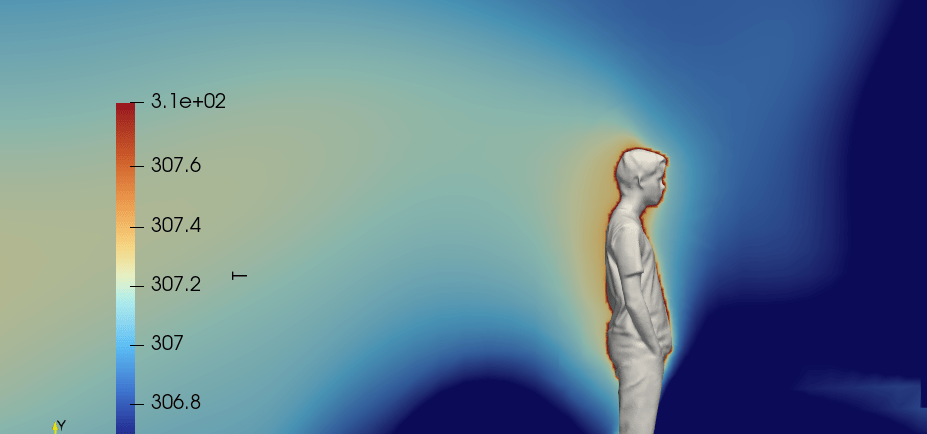
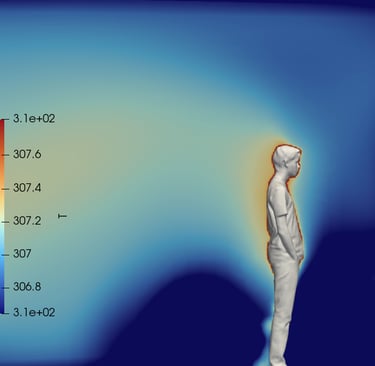
The kitchen has long been known as a place where heat quickly builds and comfort can easily be compromised. In many workplaces, kitchens are common areas used for preparing meals, socializing, or simply taking a break. However, these environments can rapidly become unpleasant if heat, smoke, and odors are not properly controlled. Cooking equipment, radiant surfaces, and dense occupancy often combine to elevate temperatures, create pockets of stagnation, and push warm air into surrounding spaces. To address these concerns responsibly, engineers frequently turn to HVAC design standards, thermal comfort criteria, and computational simulation to ensure that the indoor environment remains safe, healthy, and comfortable.
Thermal comfort itself is defined as a state in which occupants are satisfied with their surroundings, often measured using indices that combine temperature, air movement, humidity, metabolic rate, and clothing insulation. While temperature is a key component, it is only one factor influencing well-being in kitchen environments. Smoke dispersal, moisture levels, contaminant concentration, and ventilation efficiency all shape perceived comfort and safety. Kitchens, especially those adjacent to working spaces, must therefore be assessed not just for air temperature but also for airflow patterns, convective currents, buoyancy effects, and pollutant transport.
Computational fluid dynamics (CFD) has emerged as a powerful method for analyzing and improving kitchen ventilation strategies. By simulating convective heat transfer, airflow circulation, and contaminant dispersion, engineers can evaluate how cooking appliances, exhaust systems, window openings, and occupant presence influence the surrounding microclimate. Heat from appliances and occupants produces density variations that naturally drive buoyant motion. This phenomenon is central to convective heat transfer analysis, allowing engineers to identify where hot air accumulates, where smoke may linger, and where ventilation is inadequate. CFD also helps reveal how targeted interventions—such as repositioning exhaust hoods, adjusting supply airflow, modifying diffuser layout, or changing appliance placement—can mitigate thermal discomfort.
A representative study involved constructing a detailed model of a kitchen containing cooking appliances, seating areas, and multiple occupants. The geometric setup included components that introduce heat, areas of passive airflow, and intended extraction paths. Air properties, gravity direction, and heat sources were defined, while thermal boundary conditions were applied to surfaces representing people, equipment, and radiating fixtures. To evaluate pollutant behavior, a passive scalar was introduced at the cooking surface, mimicking smoke generated during food preparation. After simulation, the results showed temperature gradients, upward buoyant plumes, recirculating thermal pockets, and the extent to which smoke spread toward adjacent rooms. These insights made it possible to judge ventilation effectiveness, analyze safety conditions, and propose design refinements that would provide more controlled temperatures and reduce contaminant migration.
Studies like this demonstrate that thermal comfort cannot be solved by intuition alone. Kitchens are dynamic, highly loaded environments where convective motion, localized heat sources, and human occupancy interact continuously. To ensure safety and maintain a pleasant working atmosphere, engineers can use simulations to predict peak temperatures, assess ventilation performance, and ensure compliance with commonly referenced comfort standards. In doing so, they prevent excessive heat stress, limit productivity loss, and reduce the risk of complaints or regulatory concerns.
Improve Kitchen Ventilation & Heat Transfer Analysis with tensorHVAC-Pro
For engineers seeking to evaluate indoor airflow, radiative heat gain, convective plumes, or pollutant transport, tensorHVAC-Pro offers a specialized CFD platform designed for HVAC and occupant-comfort studies. With automated meshing, convection-focused solvers, and tools for visualizing temperature fields and airflow distribution, tensorHVAC-Pro enables designers to optimize ventilation layout, refine thermal control strategies, and validate comfort targets early in the design process—ensuring safer, cleaner, and more comfortable indoor environments.
tensorHVAC-Pro is a dedicated HVAC flow and thermal simulation software, Intuitive and easy to use, designed for HVAC engineers - not CFD expert. Learn more..
Read more articles..