
What is Thermal Stratification and How Its Related to Comfort
What is Thermal Stratification and How Its Related to Comfort
ARTICLES
Wiratama
12/20/20252 min read
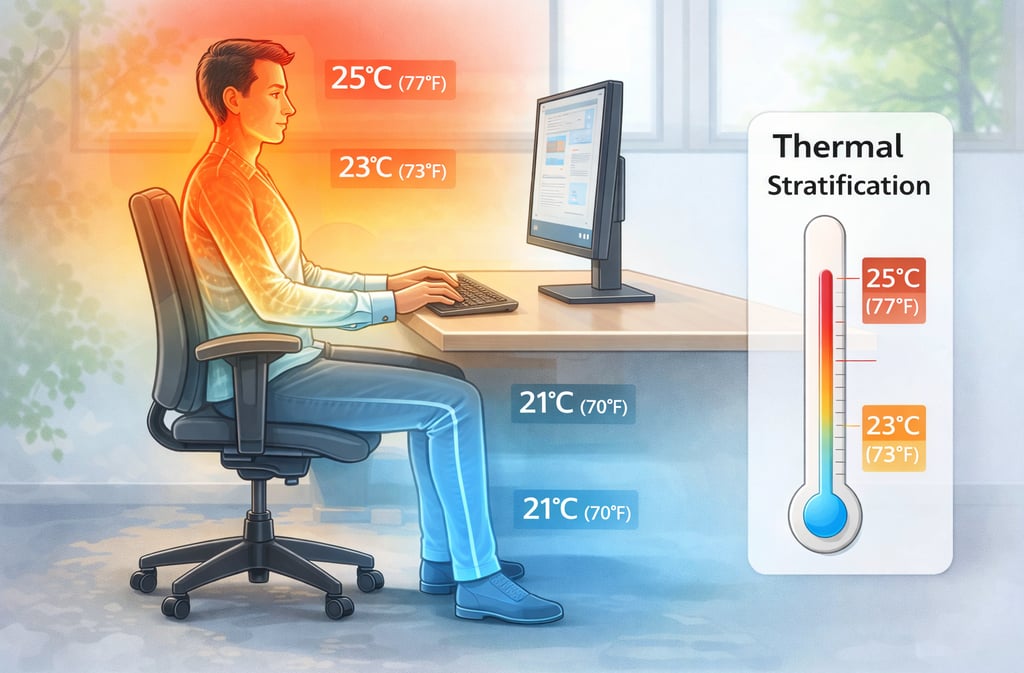
Thermal stratification is the formation of vertical temperature layers in an indoor environment, where warmer air accumulates near the ceiling and cooler air remains closer to the floor. This phenomenon occurs naturally because warm air is lighter than cold air and therefore rises. In offices and other occupied spaces, thermal stratification is influenced by heat sources such as occupants, computers, lighting, and solar radiation, as well as by how air is supplied and removed by the HVAC system.
As thermal stratification develops, a vertical temperature gradient forms within the occupied zone. This means that the air temperature around a person’s head can be noticeably different from the temperature around their feet. Even when the average room temperature is within a comfortable range, this uneven distribution can strongly affect how comfortable a person feels.
Human thermal comfort is particularly sensitive to vertical temperature differences. The body tends to prefer slightly warmer conditions around the lower extremities and slightly cooler conditions around the head. When this balance is reversed, such as when the head is exposed to warm air while the feet remain cold, discomfort becomes more likely. This condition is often perceived as stuffiness, cold feet, or general thermal dissatisfaction, especially for seated occupants in offices.
To address this issue, indoor comfort standards define limits for acceptable vertical temperature gradients. According to widely used comfort guidelines, the maximum allowable vertical air temperature difference between ankle level (approximately 0.1 m above the floor) and head level (approximately 1.1 m for seated occupants) is 3 °C. When this limit is exceeded, the environment is likely to cause discomfort, even if the average room temperature meets design targets. This requirement is intended to minimize vertical thermal asymmetry and ensure that occupants experience a uniform and comfortable thermal environment.
Thermal stratification also affects how the human body regulates heat. If warm air accumulates around the upper body, the body may struggle to release heat effectively, triggering sweating and discomfort. At the same time, cooler air near the feet can lead to localized cold sensations. This mismatch forces the body to work harder to maintain thermal balance, reducing overall comfort and potentially affecting concentration and productivity during prolonged sitting.
The impact of thermal stratification is closely tied to HVAC system design. Mixing ventilation systems aim to reduce stratification by evenly distributing air throughout the space, keeping the vertical temperature gradient well below the allowable limit. Displacement ventilation systems, on the other hand, intentionally create controlled stratification by supplying cool air at floor level and removing warm air near the ceiling. When properly designed, displacement ventilation can maintain acceptable temperatures within the occupied zone while improving energy efficiency, as long as the head-to-ankle temperature difference remains within the recommended range.
In office environments, excessive thermal stratification often indicates poor air distribution, insufficient airflow, or improper diffuser placement. These issues can be identified and corrected through careful system design and analysis, often supported by computational fluid dynamics (CFD) simulations. Such analyses help engineers visualize temperature gradients and ensure compliance with comfort criteria before a system is installed or modified.
In summary, thermal stratification is a natural feature of indoor air behavior, but its effect on comfort depends on how well it is controlled. Maintaining a vertical temperature gradient of no more than 3 °C between head and ankle level is essential for ensuring thermal comfort. By understanding and managing thermal stratification, designers and engineers can create indoor environments that are not only energy efficient but also comfortable, healthy, and supportive of occupant well-being.
Read more articles..