
Comfort Parameters for HVAC Theory Guide
THEORY-GUIDE
Wiratama
11/9/20252 min read
Introduction to Comfort Parameters
In building design and HVAC engineering, achieving optimal indoor comfort is paramount. Comfort parameters such as Predicted Mean Vote (PMV), Predicted Percent Dissatisfied (PPD), Draught Rate (DR), and Air Age are essential for assessing thermal comfort. These metrics enable professionals to make informed decisions about HVAC system adjustments and occupant satisfaction.
Key Comfort Parameters Explained
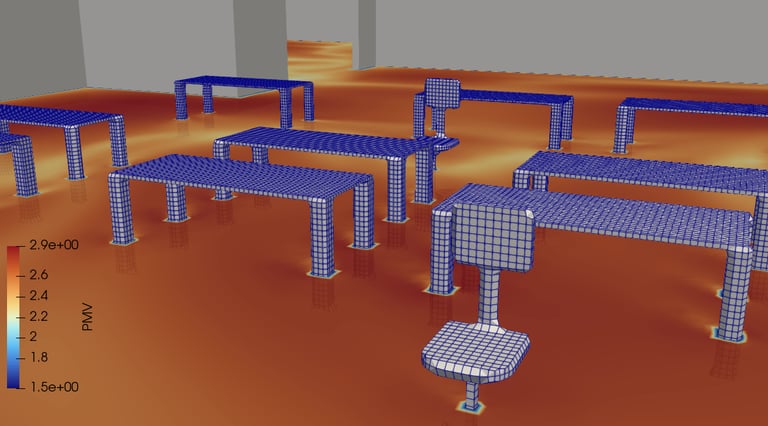
1. Predicted Mean Vote (PMV): This index quantifies the average thermal sensation a group of individuals would feel in a specified environment, ranging typically from -3 (cold) to +3 (hot). The PMV is calculated based on several inputs, including clothing insulation (Clo) and metabolic rate. Learn more >>
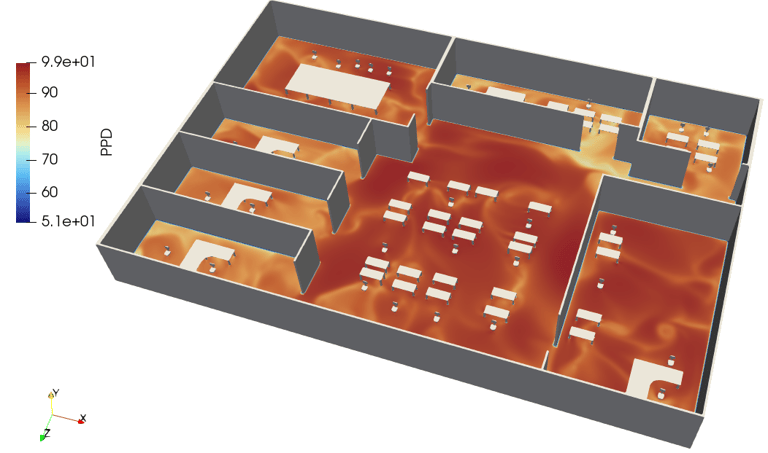
2. Predicted Percent Dissatisfied (PPD): The PPD provides an estimate of the percentage of people likely to feel dissatisfied with their thermal environment. It is directly linked to the PMV, indicating how changes in the PMV affect comfort levels. A PPD value below 10% is often considered acceptable. Learn More >>
3. Draught Rate (DR): The Draught Rate measures the likelihood that people will experience unpleasant drafts in a space. This parameter is critical for ensuring airflow design does not lead to discomfort. Learn More >>
4. Air Age: Air Age reflects the average time since air entered a space, influencing freshness and pollutant levels. Short air age signifies that airflow is recent, while longer air age can denote stagnation. Learn More >>
Calculating Comfort Parameters Using TensorHVAC-Pro
TensorHVAC-Pro simplifies the calculation of these comfort parameters through its user-friendly interface. By inputting essential data such as clothing insulation (Clo), metabolic rate, relative humidity, and saturation pressure, users can accurately determine PMV, PPD, DR, and Air Age.
To begin calculations, users first specify the Clo value, which corresponds to an individual's clothing insulation level. Learn more about Clo >>
This is crucial as it directly affects the thermal sensation. Next, inputting the metabolic rate helps TensorHVAC-Pro evaluate how much heat a person generates through activity. Learn more about Met >>
Furthermore, integrating relative humidity and saturation pressure into the inputs gives a comprehensive picture of the indoor climate. These parameters impact how humidity levels affect thermal comfort, which is pivotal in areas with high humidity. Learn More about Relative Humidity >>
After entering the requisite data, TensorHVAC-Pro processes this information to provide calculations of PMV, PPD, DR, and Air Age. By interpreting these results, professionals can adjust HVAC settings to ensure enhanced indoor comfort for occupants.
Conclusion
Understanding and calculating comfort parameters like PMV, PPD, DR, and Air Age using TensorHVAC-Pro is vital for designing comfortable indoor spaces. Through accurate calculations based on user inputs such as Clo, metabolic rate, relative humidity, and saturation pressure, engineers and building managers can achieve optimal thermal comfort levels, ensuring satisfaction for all occupants.
Read more tensorHVAC-Pro theory guides..